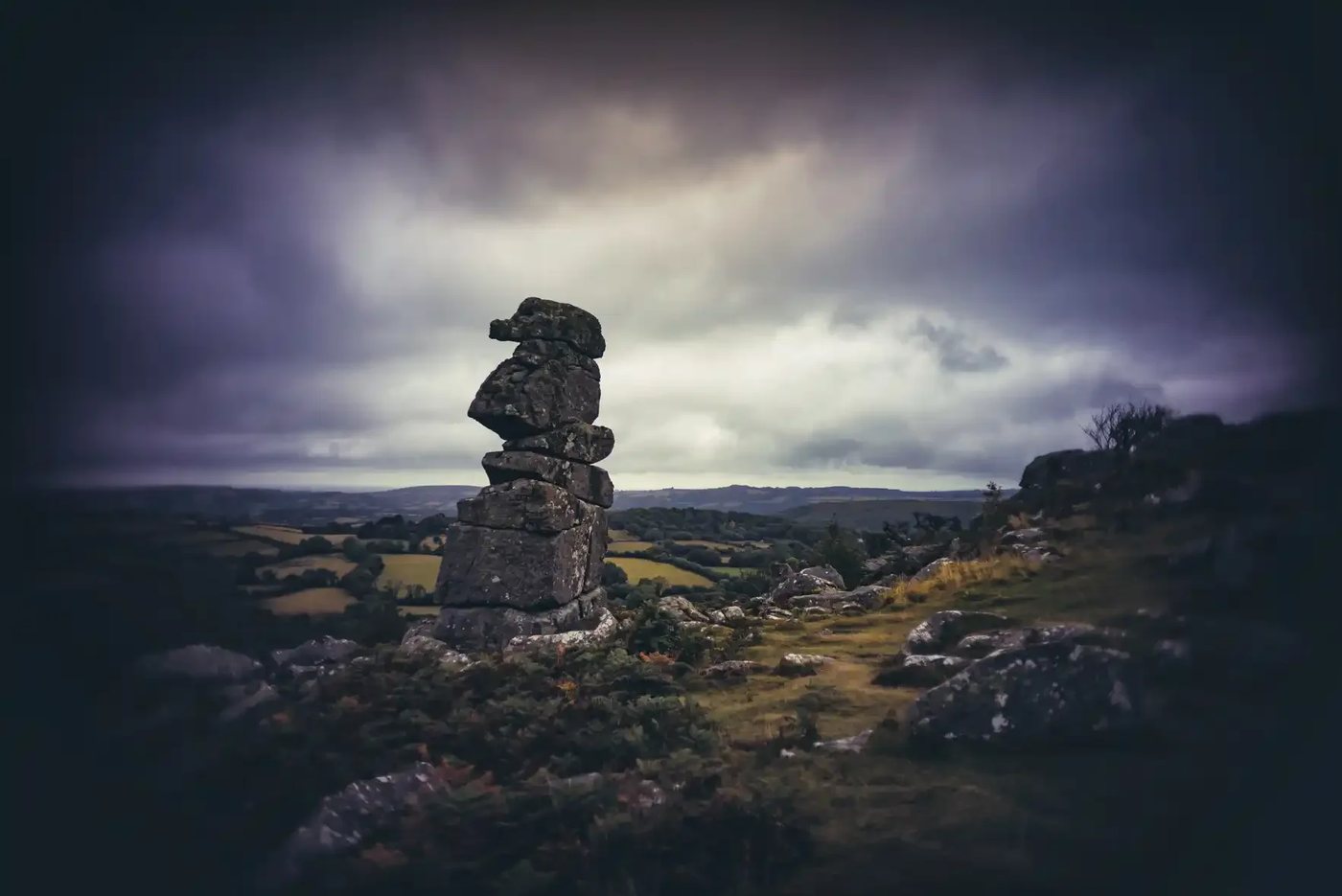
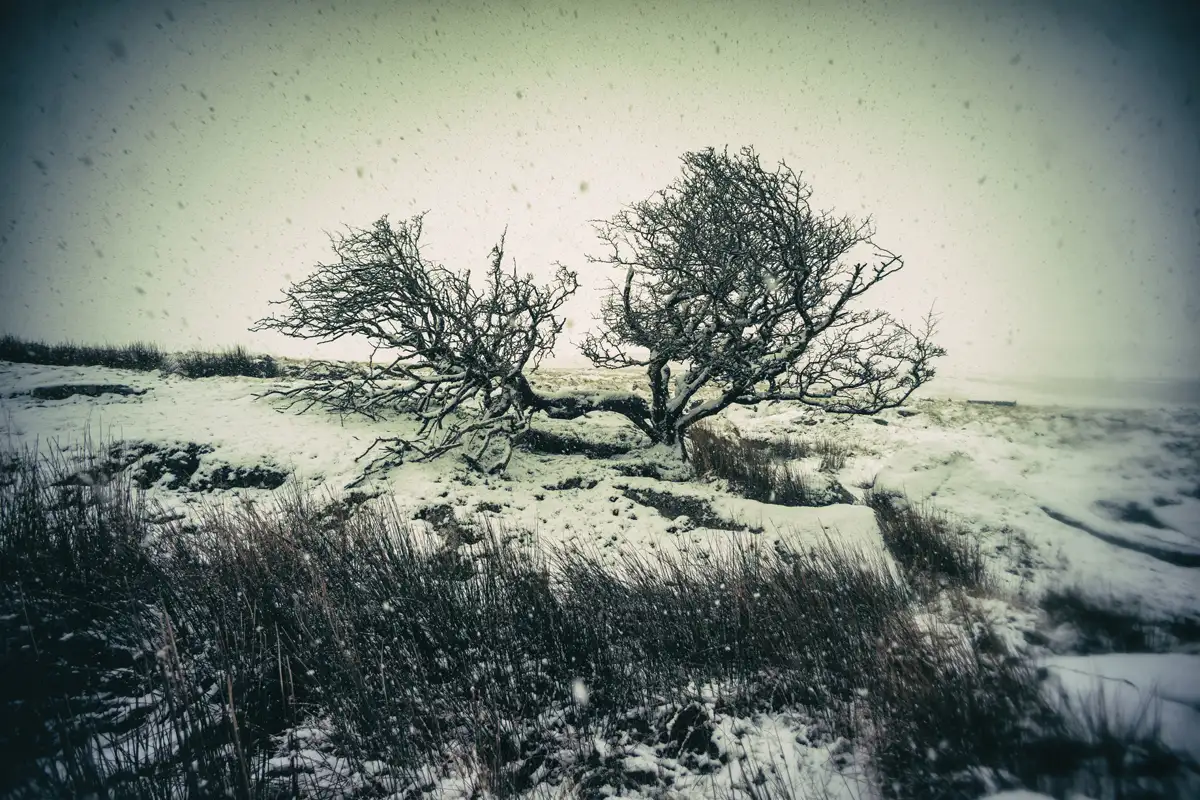
Photo © Richard Dorrell, CC BY-SA 2.0, via Wikimedia Commons
Haytor Vale
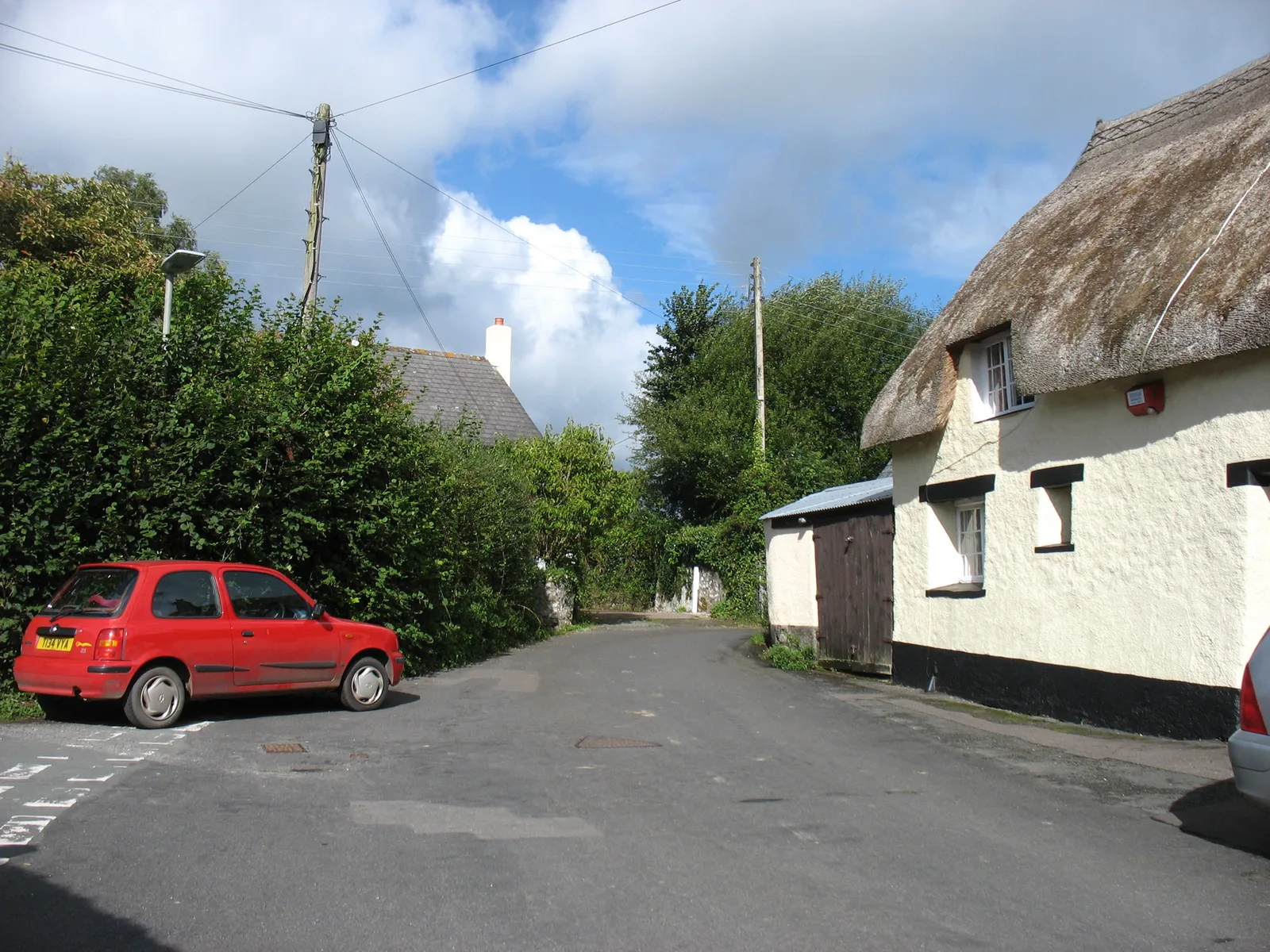
Haytor Vale is a village in Ilsington parish on the eastern edge of Dartmoor, below Haytor Rocks. It was built to house workers from the Haytor granite quarries. In the 1820s George Templer (the Rock Inn site spells it Templar), son of James Templer of the Stover estate, began taking granite from Haytor Down, and a row of cottages and the Rock Inn went up at the same time.
Templer's granite tramway opened in 1820 and ran 8.5 miles from the Haytor and Holwell quarries to the Stover Canal at Ventiford. Its rails were cut from granite, not iron, with flanges carved along the edges and points to switch wagons between branches. It cost about £30,000 and was in use until about 1858. Haytor granite went into London Bridge (opened 1831), the British Museum and the National Gallery. Employment had dropped sharply by the 1840s. Legendary Dartmoor mentions a dispute in 1841. The Rock Inn says the last stone was cut in 1919, for the Exeter War Memorial, so the quarries were not quite finished in 1858.
Iron mining at Smallacombe between the 1850s and 1910 employed over 80 people at its peak. The Graves family have run the Rock Inn since 1983. The tramway is now a Scheduled Monument and its route is walked as the Templer Way.
Haytor Vale on the map
In Haytor Vale
Black Hill
Haytor Vale, Bovey Tracey
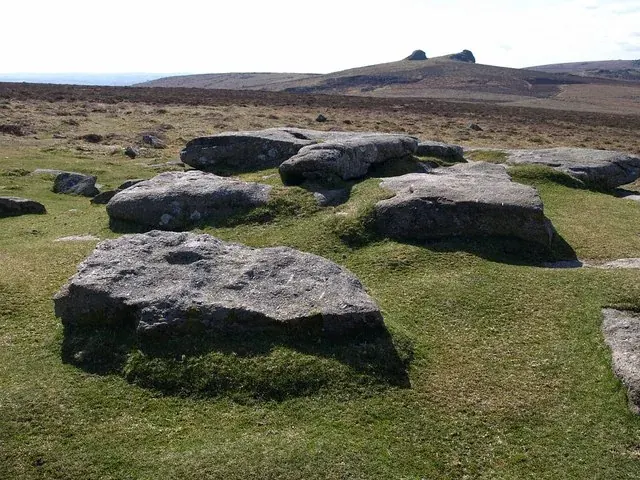
Fairly flat-topped hill of about 406 m north of Haytor, carrying a group of about 12 cairns, five of them scheduled, above the River Bovey.
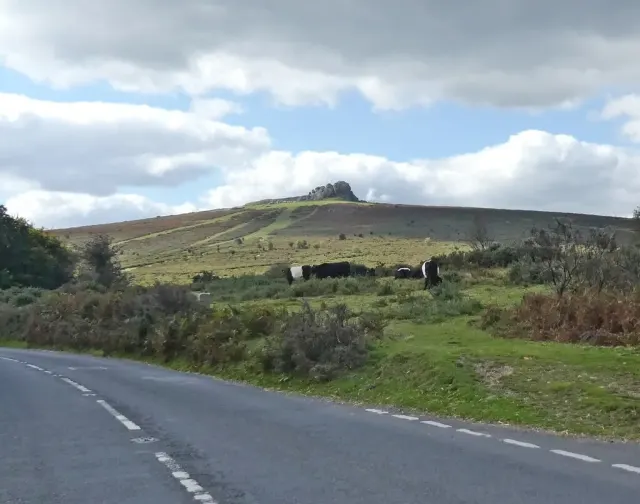
Direction Post On South East Side Of Haytor Down, On North West Side Of The Road About 60 Metres North East Of The Turning To Haytor Vale
Haytor Vale, Bovey Tracey
A direction post marking the junction near Haytor Vale, a modest survivor of Dartmoor's Georgian road infrastructure.
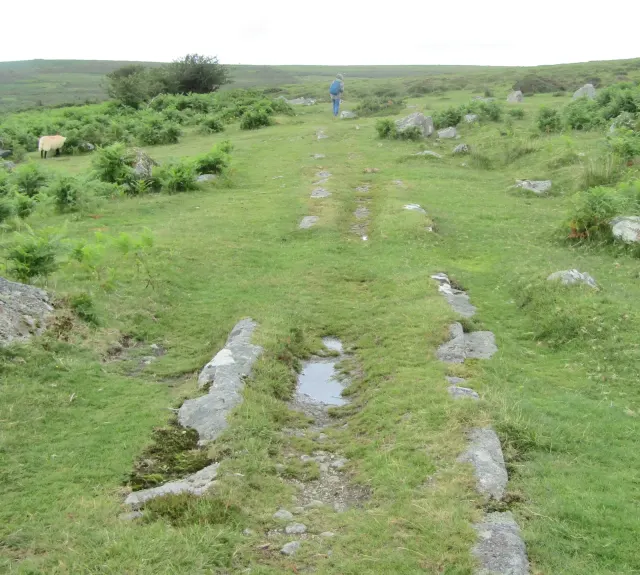
Haytor Granite Tramway
Haytor Vale
A tramway built by George Templer in 1820 to carry granite from the Haytor Quarries down to the Stover Canal at Ventiford, a fall of about 1,300 feet over roughly ten miles. Unusually, its rails were grooved granite setts rather than iron, cut and laid directly into the moor.
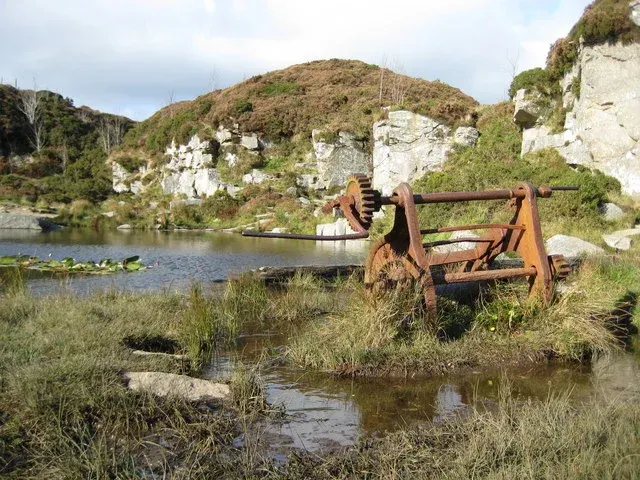
Haytor Quarries
Haytor Vale
Five disused granite quarries on the east side of Dartmoor, worked from around 1820 by George Templer. Stone from here built the old London Bridge, completed in 1831, and travelled to the coast via the Haytor Granite Tramway and Stover Canal.
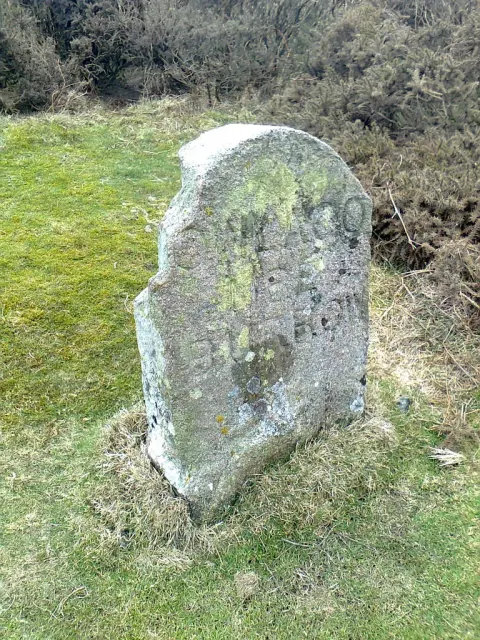
Owlacombe Burrow Rock
Haytor Vale
Owlacombe Burrow Rock is a non-gneissic rock face located near Haytor Vale, standing about 400 metres east of the minor road to Manaton.
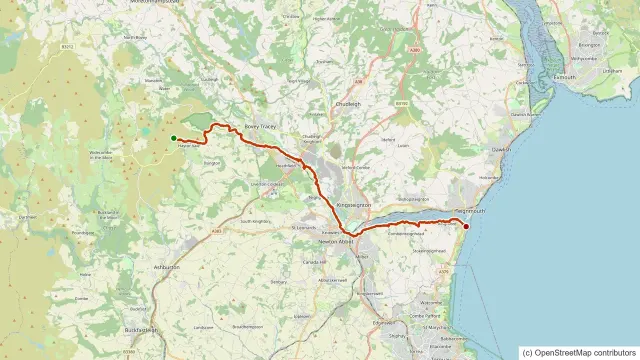
Templer Way
Haytor Vale, Bovey Tracey
The Templer Way follows the old granite trade route from the Haytor quarries down off the moor to the sea at Teignmouth.

The Dartmoor Artist
Haytor Vale, Newton Abbot
Sarah Smith is a self-taught artist and sustainable homeware maker living and working on a Dartmoor farmstead near Haytor. Featured in Country Living and listed among the UK's Top 100 Female Entrepreneurs. Creates hand-painted acrylic paintings, botanical prints, illustrated homewares and stationery inspired by Dartmoor's seasons, hedgerows and moorland.
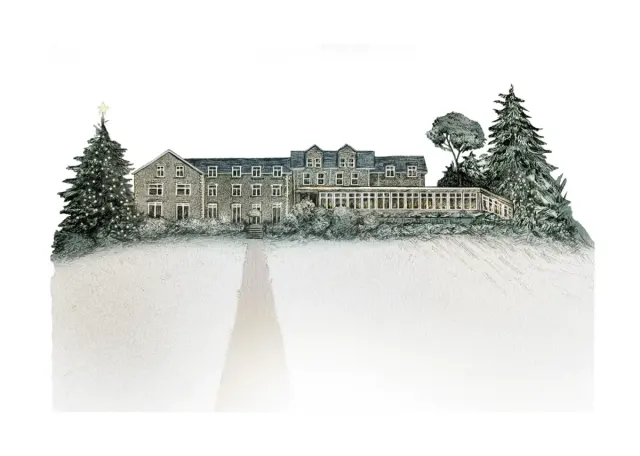
The Moorland Hotel
Haytor Vale, Newton Abbot
Based in the stunning Dartmoor National Park, The Moorlands Hotel in Haytor is the perfect location to relax or explore the countryside.

Ullacombe Farm Shop
Haytor Vale, Bovey Tracey
Farm shop, butchery and café in Bovey Tracey offering locally sourced meat, produce, homemade food and a family-friendly space.