Merrivale Antiquities
Dartmoor Forest, Tavistock
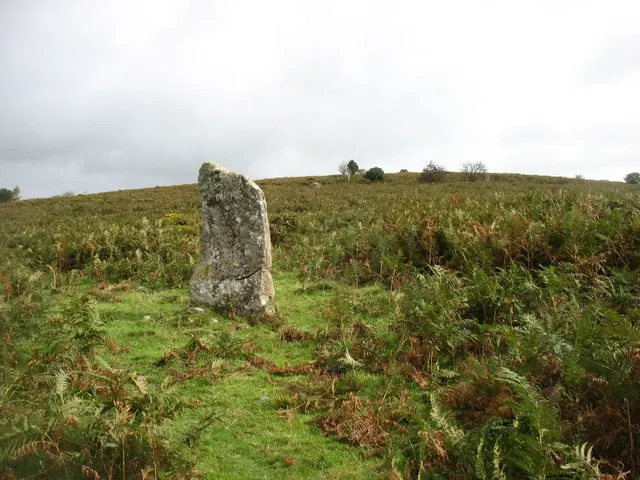
The stone rows, stone circle, standing stone, cairns and hut circles around Merrivale Bridge: Dartmoor's best-known group of Late Neolithic and Bronze Age ritual and settlement remains.
Showing listings tagged “Reaves” Show all listings
Dartmoor Forest, Tavistock
The stone rows, stone circle, standing stone, cairns and hut circles around Merrivale Bridge: Dartmoor's best-known group of Late Neolithic and Bronze Age ritual and settlement remains.
“The peat glowed as though it were red-hot, and night brooded on the eastern face of every hill.”
Who wrote this?
Four scheduled monuments on the slopes of Cox Tor: two cairnfields, part of the Whitchurch Common coaxial field system and a reave later used by troops.
Seven scheduled vermin traps on Trowlesworthy Warren: drystone walls aimed at a gully, a boundary wall, the river or the china clay leat to funnel predators.
Moretonhampstead
Butterdon Hill, 351 m, in north-east Dartmoor north of Moretonhampstead: a 2.3 m granite standing stone on its west side and cairns on the summit.
A small tor near Kes Tor on the Chagford side of the moor, noted by Rowe for a rock basin and an overhanging face.
A small tor on Tor Hill east of Widecombe, close to Top Tor and Hollow Tor, with Foales Arrishes and its hut circles just to the east.
Bronze Age cairns and medieval farmstead within a reave system on Dartmoor.
A 290-metre stretch of Bronze Age reave forming part of an ancient field system on Whitchurch Common.
Bronze Age settlements and tin mining remains on the high moor, with evidence of ancient field systems.
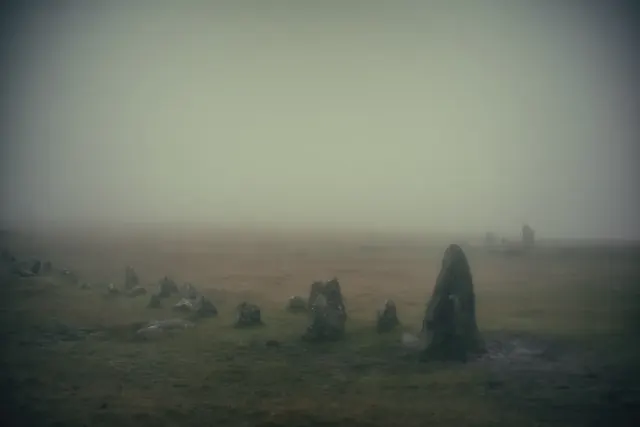
Photograph by Glavind Strachan Photography“The fogs are most deceptive and very tricky. They come on unexpectedly, and change the whole aspect of the surroundings. They magnify all things ; hills comparatively small appear as high mountains, and a small bird like a snipe looks as big as a pigeon.”
Also on Our DartmoorMilestone, SX 7690 7083 — A granite milestone marking the turnpike roads that crossed Dartmoor in the 18th and 19th centuries.