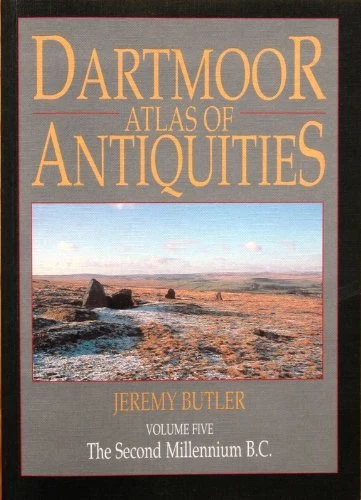
Dartmoor Atlas of Antiquities, Volume Five: The Second Millennium BC
Volume Five of Jeremy Butler's five-volume Dartmoor Atlas of Antiquities (Devon Books, 1997), covering the Second Millennium BC.
Showing listings tagged “Cairnfield” Show all listings
Volume Five of Jeremy Butler's five-volume Dartmoor Atlas of Antiquities (Devon Books, 1997), covering the Second Millennium BC.
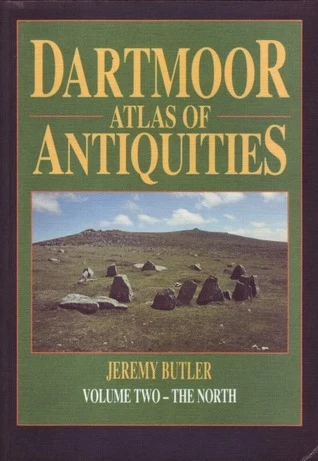
Volume Two of Jeremy Butler's five-volume Dartmoor Atlas of Antiquities (Devon Books, 1991), covering the north of Dartmoor.
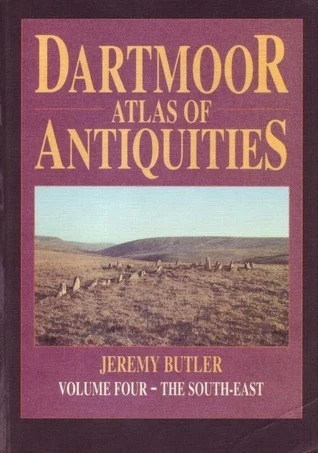
Volume Four of Jeremy Butler's five-volume Dartmoor Atlas of Antiquities (Devon Books, 1993), covering the south-east of Dartmoor.
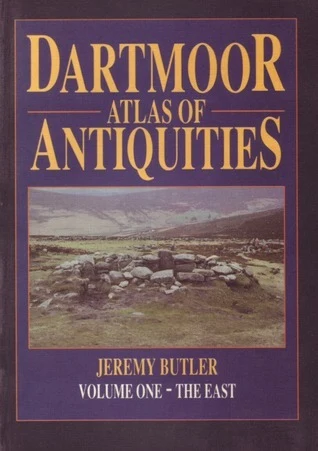
Volume One of Jeremy Butler's five-volume Dartmoor Atlas of Antiquities (Devon Books, 1991), covering the east of Dartmoor.
“The peat glowed as though it were red-hot, and night brooded on the eastern face of every hill.”
Who wrote this?
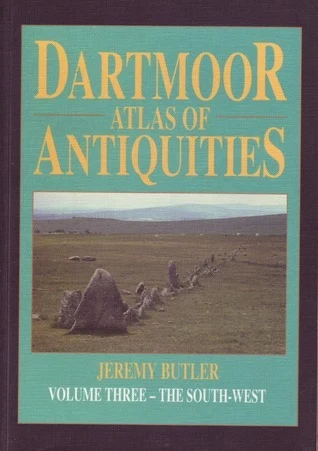
Volume Three of Jeremy Butler's five-volume Dartmoor Atlas of Antiquities (Devon Books, 1994), covering the south-west of Dartmoor.
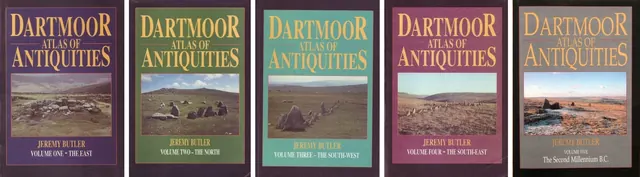
The five-volume survey of Dartmoor's archaeological sites by Jeremy Butler (Devon Books, 1991 to 1997): four regional volumes and a fifth on the Second Millennium BC, with maps, plans, grid references and an index.
Walkhampton, Yelverton
A cairnfield of 17 mounds, two boundary banks and a lynchet on the south-west slope of Raddick Hill, in five scheduled monuments, above the River Meavy.
Peter Tavy, Tavistock
Two Bronze Age cairnfields on White Hill: a western-slope field of about 26 mounds above Lydford and a northern-slope field of at least 22 above the Walla Brook, in six scheduled monuments.
Okehampton Hamlets, Okehampton
A Bronze Age cairnfield of at least 64 mounds in 26 scheduled monuments on the ridge and slopes of Longstone Hill, above the West Okement River.
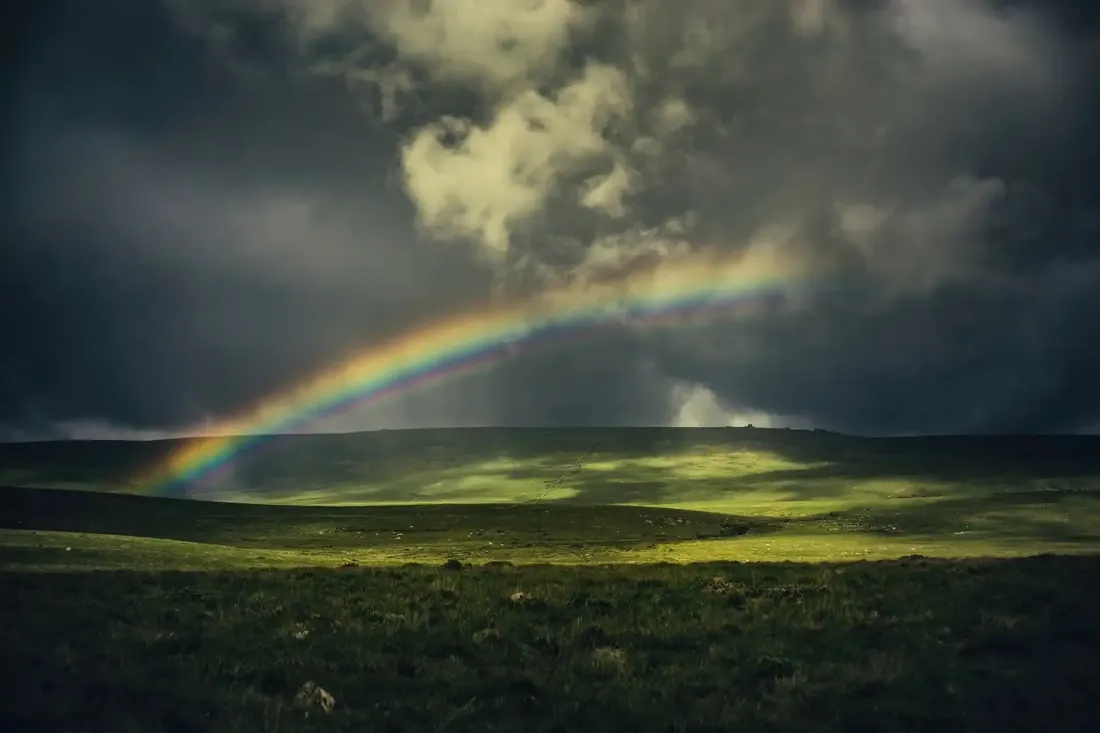
Rainbow - watern tor in the distance. Photograph by Glavind Strachan Photography“Patches of mist all full of silver light moved like lonely living things on the face of the high Moor.”
Also on Our DartmoorTinners Hut — A weathered stone shelter hidden in Dartmoor's high moorland, built by tin miners centuries ago.