

← Browse Folklore, Myth & Legend · Browse the directory

The Legend of Kitty Jay
Grid ref: SX 7575 7823
On walking routes: Templer Way
Main image: Photo: Mike White, Wikimedia Commons
The popular version goes like this: Kitty Jay, a young woman, died by suicide in the late 18th century. Because of the laws of the time, suicides were denied burial in churchyards, so she was interred instead at a crossroads on the moor near Hound Tor, as was customary. Her grave became marked, and it has become one of Dartmoor's best-known landmarks. The story, as most people tell it, includes a ghost, though the details vary depending on who is doing the telling.
Where this tale actually comes from is harder to pin down. I have not yet found a contemporary written record of Kitty Jay herself, or of her death. The grave is real and well-documented as a place, but the story that attaches to it seems to solidify in the folklore record sometime in the 20th century (Legendary Dartmoor covers it, but I would want to look further back before saying more). The version everyone knows now may owe as much to later retelling and local elaboration as to any single historical event. That does not make it less worth visiting or wondering about.
Sources and further reading
- Wikipedia: Jay's Grave
- Further reading: Legendary Dartmoor
The name "Kitty Jay" first appears in print in William Crossing's 1909 Guide to Dartmoor, a brief note about an unmarried woman's suicide with no motive given and no romance attached. The now-familiar "betrayed orphan" story only enters print later: John Galsworthy's 1912 poem "The Apple Tree" references her grave, followed by Beatrice Chase's 1914 novel. Sabine Baring-Gould's own 1900 survey of the same district does not mention Jay's Grave at all. The romance, in other words, is a 20th-century addition to a bare 19th-century burial.
Thoughts
Be the first to share a thought about The Legend of Kitty Jay.
Share a thought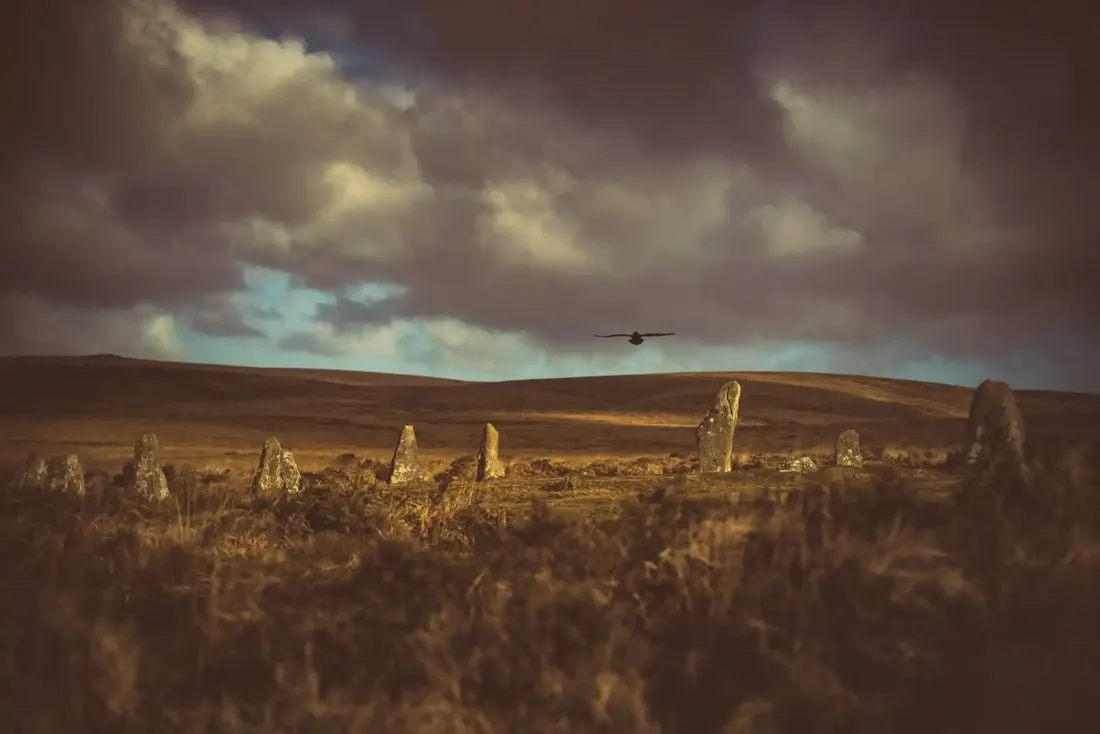 Crow at scorhill stone circle. Photograph by Glavind Strachan Photography
“The wind was blowing the rain in our faces, but we stepped out endeavouring to treat it as a light matter, though it certainly required some amount of self deception to do it, for we were having a taste of real Dartmoor weather.”
Also on Our DartmoorWigford Down — A prominent moorland down with a large cairn marking the summit, offering wide-ranging views across Dartmoor.
Know another Dartmoor place, tor or landmark we should include? Suggest a listing, it is free.
Suggest a listing