White Moor Stone
Throwleigh, Chagford
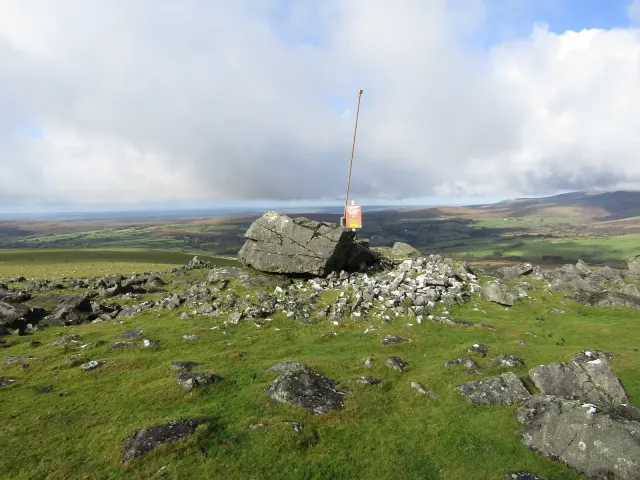
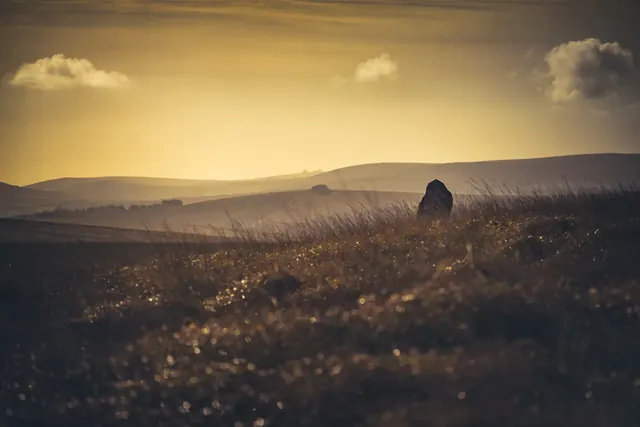
Standing stone 1.7 m high on the col between Little Hound Tor and Hound Tor, where Dartmoor Forest, Throwleigh and South Tawton parishes meet.
Dartmoor's archaeology and heritage - antiquities, historic buildings and museums.
Throwleigh, Chagford
Standing stone 1.7 m high on the col between Little Hound Tor and Hound Tor, where Dartmoor Forest, Throwleigh and South Tawton parishes meet.
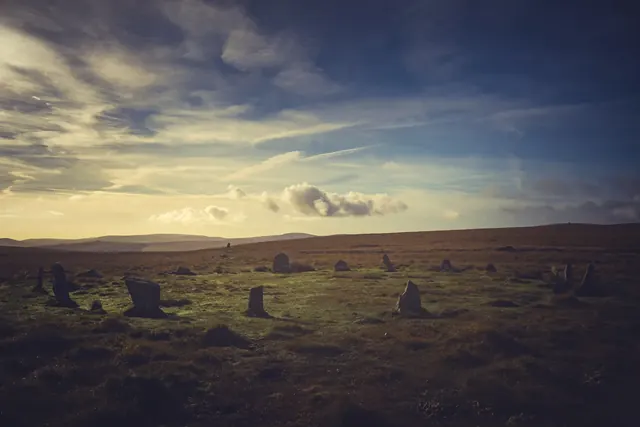
A stone circle of 18 stones, 20.2 m across, on the saddle between Hound Tor and Little Hound Tor, with a small cairn beside it. Five stones were re-erected in the 1890s.
Three agglomerated enclosures with about 21 hut circles, a kerbed cairn and part of the Stannon block field system on White Ridge in Great Stannon Newtake; eight huts dug in the 1890s.
Iron Age hilltop settlement on the open moor, where ancient stone foundations still trace the lives of Dartmoor's earliest inhabitants.
The Whitehorse Hill cist near the summit, 0.4 m wide, with its capstone still in place, once visible in a peat island, covered in 2001 by a protective drystone wall 3 m long.
Haunting tin mine ruins nestled in Dartmoor's high moorland, where industrial heritage meets wild landscape.
Widecombe-in-the-Moor, Ashburton
The historic showfield where Widecombe Fair has celebrated moorland life and culture since the 19th century.
A medieval wayside cross standing on Wigford Down, near Cadover Bridge, marking an old route across the moor.
Photograph by Glavind Strachan Photography“Somewhere in the heart of the great Grimpen Mire, down in the foul slime of the huge morass which had sucked him in, this cold and cruel-hearted man is forever buried.”
Also on Our DartmoorJohn Dunning, 1st Baron Ashburton — Ashburton-born lawyer John Dunning (1731 to 1783), Solicitor General and Lord Ashburton, who bought the Spitchwick lease in about 1769 and built his Dartmoor house there.