Skip to content

← Browse Churches & Chapels · Browse the directory

Churches & Chapels

Church of St Michael, Princetown

Princetown, Yelverton, Devon

Grid ref: SX 5867 7371

Part of Princetown →

On walking routes: Abbot's Way

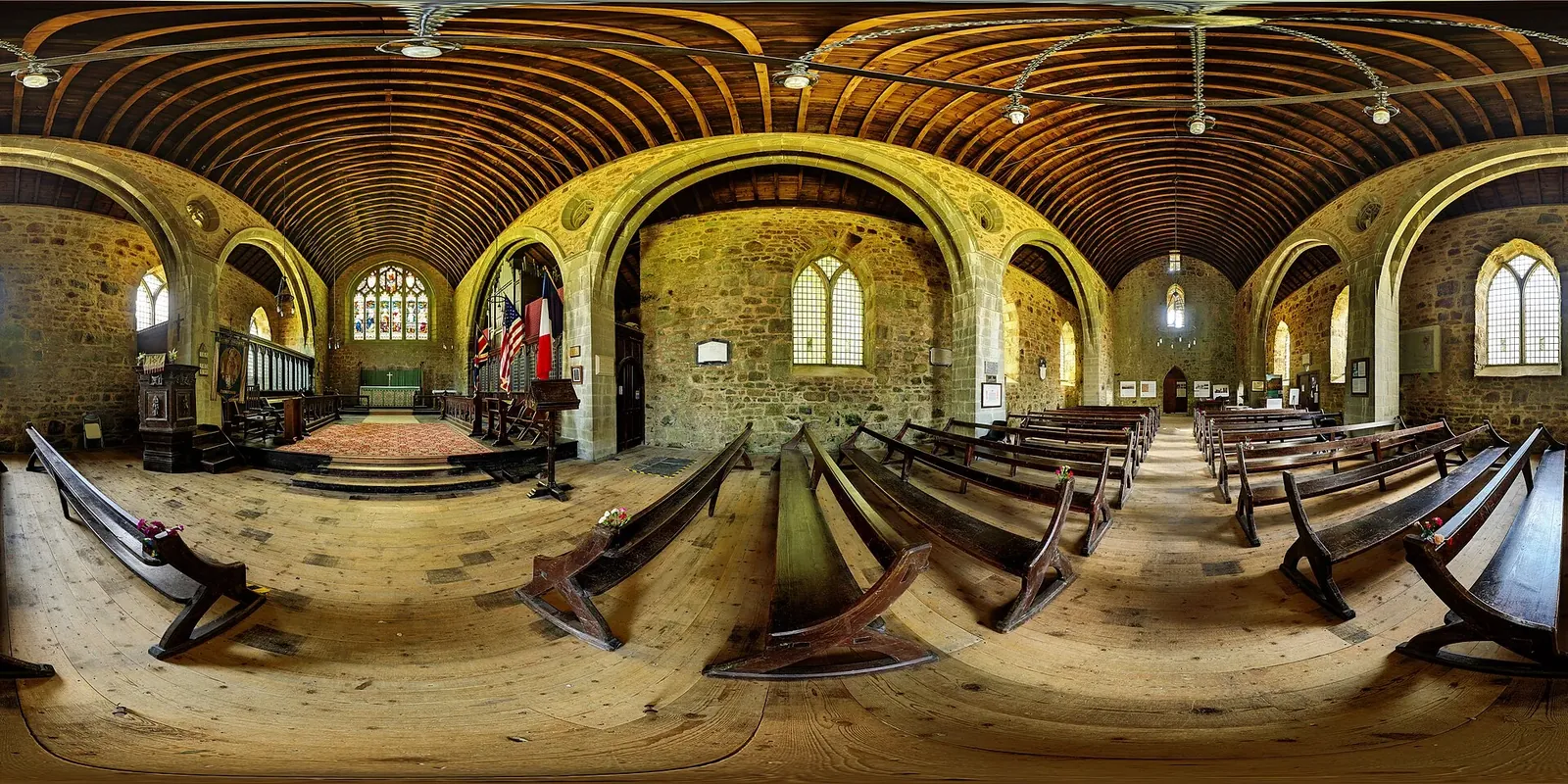
Main image: Photo: Virtual-Pano, Wikimedia Commons

  • Grade: II*
  • Date: about 1810-14; chancel improved 1868; enlarged 1898-1901; tower restored 1915
  • Material: granite rubble with dressed granite quoins, slate roof
  • Historic England list entry: 1105434

St Michael's at Princetown was built about 1810-14 to designs by Daniel Alexander, the architect of Dartmoor Prison. Historic England records that the chancel was improved in 1868, the nave arcades inserted and the chancel extended by E H Sedding in 1898-1901, and the tower restored in 1915. It is granite rubble with a slate roof, and apart from the east end the exterior of Alexander's church survives intact.

Prisoners of war from the nearby prison helped to build it. The east window, by Mayer of Munich, is in memory of the American prisoners of war who helped build the church, especially the 218 who died there. The pulpit is a mid 18th-century piece brought from St Sidwell's church in Exeter.

This is a location on Dartmoor that has a namesake. Read more about this: Dartmoor Places With the Same Name


Share

Contact us if you have information about this listing

Go deeper with Dartefacts

Dartefacts is a database of Dartmoor sites with far more close-up detail than we can show here, and it is the best place to go deeper. Dartefacts is free to use, and nobody has to pay to look things up. If you want more, a yearly subscription adds 10-figure grid references, map zoom down to 1:25,000 and lists to tick off the places you have visited, and it helps keep the site going. We would encourage you to subscribe.

Thoughts

Be the first to share a thought about Church of St Michael, Princetown.

Share a thought
Dartmoor quiz
“The simple and time-worn memorials of unchronicled ages, rear their hoary forms amidst the sombre solitudes of the moor.”

Which book is this from?

Know another Dartmoor place, tor or landmark we should include? Suggest a listing, it is free.

Suggest a listing