
Historic Buildings
Coombe Farmhouse
Grade II* listed farmhouse on Dartmoor, likely medieval or early modern in origin, with later additions.


Listed buildings and historic structures - churches, farmhouses, bridges, mills and the like.
Grade II* listed farmhouse on Dartmoor, likely medieval or early modern in origin, with later additions.

A Grade II* listed farmhouse standing by Corndon Ford on the edge of Dartmoor, likely medieval in origin.
What is the earliest known source for the legend of Old Crockern?
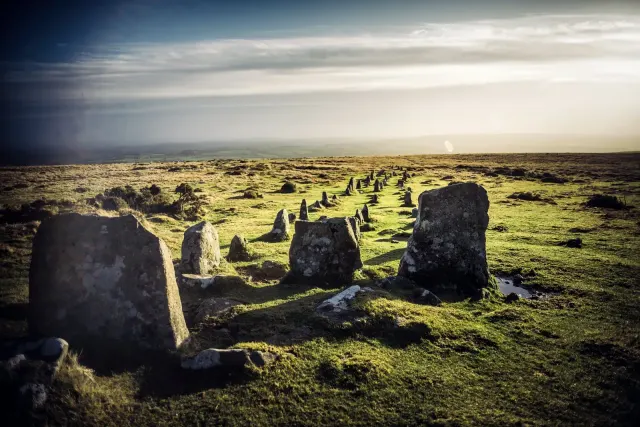
Bronze Age stone rows stretching across open moorland.

A Grade II* listed farmhouse with Georgian character, set in the Dartmoor landscape with period garden boundaries.

A pair of listed farmhouses on the moorland fringe, surviving from the medieval or early post-medieval period.


A Grade II* listed farmhouse, long abandoned, standing on the open moor near Flood with roots in medieval or early modern settlement.
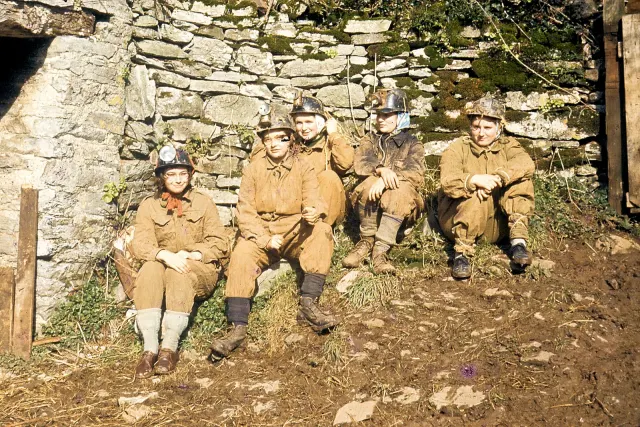
A circular Grade II* dovecote 6.28 m across with a corbelled domed roof, about 250 nesting holes in 11 tiers and a low Gothic door, restored in 1977, at Pridhamsleigh.

A Grade II* listed farmstead on the edge of Dartmoor, with 16th-century origins and the solid character of moorland vernacular building.
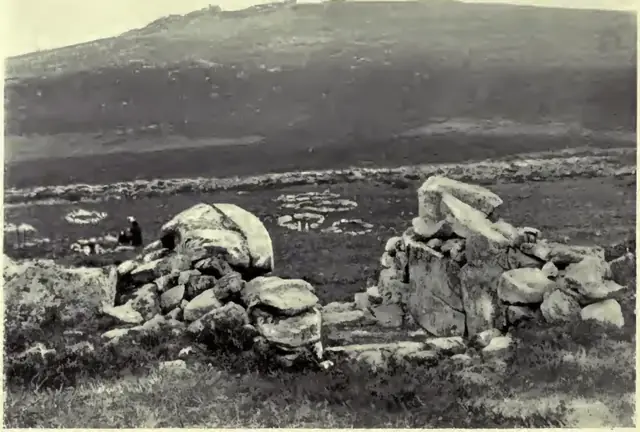 Plate from A Book of Dartmoor, page 214, 1900
“Even the half-wild cattle which range the other parts of the moor at pleasure, seem to shun the swampy steppes of the central wilderness.”
Also on Our DartmoorCists, Two Bridges — Cists, ancient stone burial tombs from around 2500 to 1500 BC, can be found near Two Bridges on Dartmoor.
