Round cairns around Down Tor
Walkhampton, Yelverton
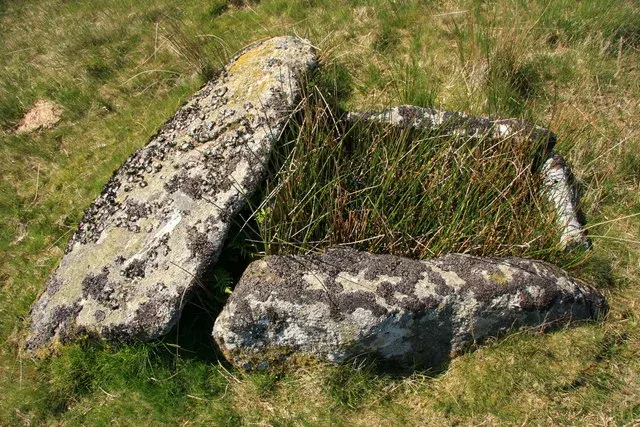
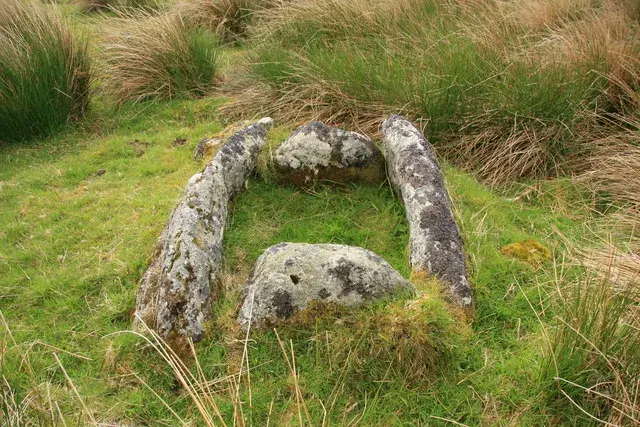
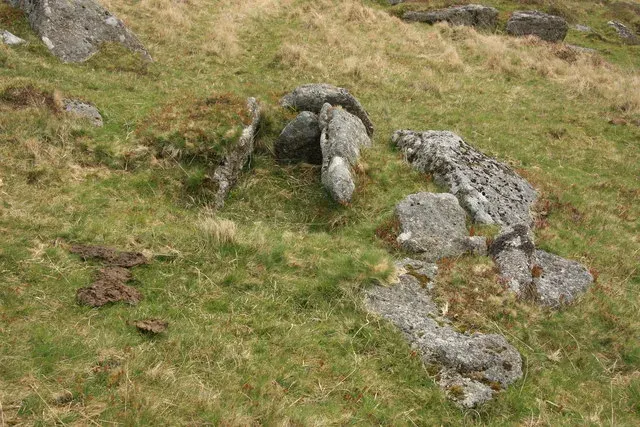
Six Bronze Age cairns in four scheduled monuments around Down Tor, four of them with burial boxes (cists), plus a cairn built against a rock outcrop.
Showing listings tagged “Cist” Show all listings
Walkhampton, Yelverton
Six Bronze Age cairns in four scheduled monuments around Down Tor, four of them with burial boxes (cists), plus a cairn built against a rock outcrop.

Which Dartmoor place is this?
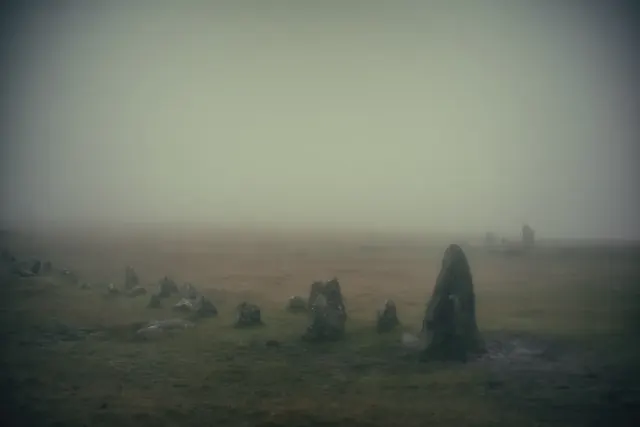
Three Late Neolithic stone rows on Longash Common by Merrivale Bridge: two parallel double rows 182 m and 264 m long and a 42 m single row, with cairns and cists.
Dartmoor Forest, Tavistock
The stone rows, stone circle, standing stone, cairns and hut circles around Merrivale Bridge: Dartmoor's best-known group of Late Neolithic and Bronze Age ritual and settlement remains.
Walkhampton, Yelverton
Five scheduled monuments on Sharpitor: round cairns north-west and north-east of the summit, three with a cist, including a group of four closely spaced cairns.
Two Bridges
Cists are ancient stone tombs found on Dartmoor, dating back to the Late Neolithic and early Bronze Age. These box-like structures, often located in the centre of cairn circles, were created by the people who lived in hut circles.
Two Bridges
Cists, ancient stone burial tombs from around 2500 to 1500 BC, can be found near Two Bridges on Dartmoor.
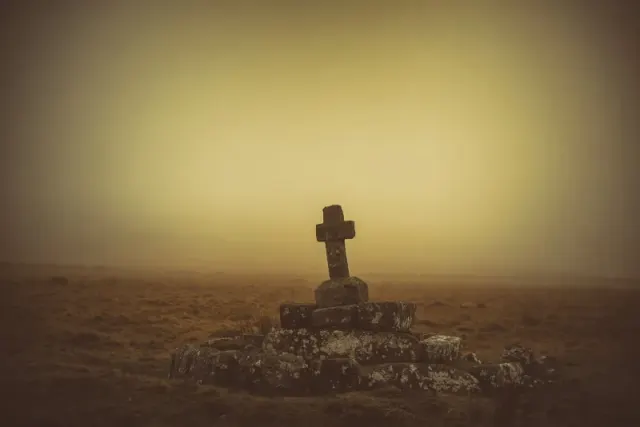
A granite cross marking the burial of a young nobleman who died on Fox Tor Mires, with competing versions of how he got there.
The high point of Tor Royal Newtake near Princetown, named for the Prince of Wales, with a scatter of Bronze Age kistvaens on its slopes including the Crock of Gold.
A hill in Bellever Forest between Postbridge and Bellever Tor, long known for its kistvaens, cairns and stone rows.