Lake Farmhouse
A Grade II* listed farmhouse on Dartmoor, a substantial rural dwelling with roots in the medieval period and evidence of later development.
Showing listings tagged “Medieval” Show all listings
A Grade II* listed farmhouse on Dartmoor, a substantial rural dwelling with roots in the medieval period and evidence of later development.
A stone-built bridge crossing the West Dart River, likely medieval in origin and grade II* listed.
A Grade II* listed manor house, likely medieval in origin, standing on the moorland fringes of Dartmoor.
A Grade II* listed bridge crossing the River Dart in the heart of Dartmoor, likely medieval in origin.
A Grade II* listed farmhouse on Dartmoor, likely dating from the medieval period or earlier, with later modifications reflecting centuries of moorland farming life.
A Grade I listed farmhouse on the high moor, likely medieval in origin, with the layered building history typical of working Dartmoor farms.
A Grade II* listed farmhouse on the high moor, likely medieval or early post-medieval in origin.
Grade II* listed farmhouse on the northern edge of Dartmoor, likely medieval in origin with later modifications.
A Grade II* listed farmhouse on the high moor, likely medieval or early modern in origin, with later additions reflecting centuries of moorland life.
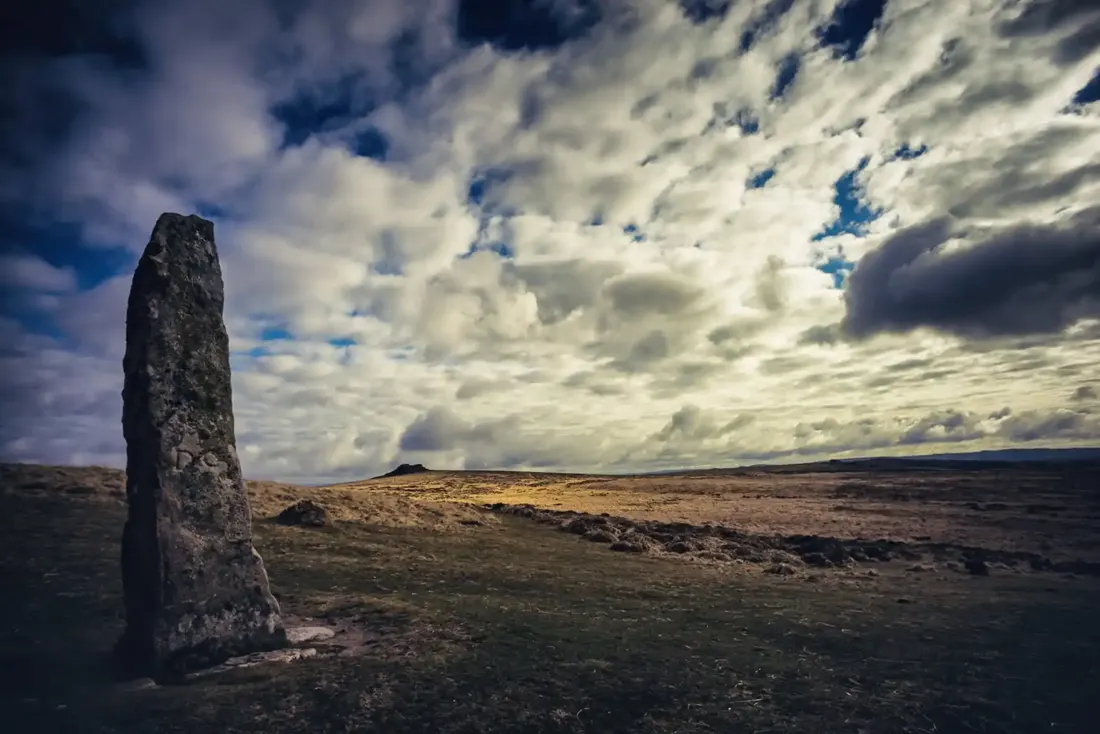
Shoveldown Menhir. Photograph by Glavind Strachan Photography“And you who read this doleful tale On days wet, hot, or cool, If you must wander on the moor, Don't go to Cranmere Pool.”
Also on Our DartmoorWalkhampton Common reave and Leeden Tor stone row — Two reaves on Walkhampton Common: 2 km of the straight central stretch of the Walkhampton Common reave and a 302 m cross reave, with two huts, a cairn and a 132 m stone row of 16 stones.