Dartmoor Bridges
A guide to the bridges of Dartmoor: the clapper bridges of slabs on piers, the packhorse bridges and the turnpike-era road bridges, grouped by river.
Showing listings tagged “River Dart” Show all listings
A guide to the bridges of Dartmoor: the clapper bridges of slabs on piers, the packhorse bridges and the turnpike-era road bridges, grouped by river.
“Oh, Miss, how can I ever thank 'ee? I bathed my arms same as you told me at bedtime and got right in bed and slept till nine o'clock this morning without moving. Us haven't had such a night for months.”
Who wrote this?
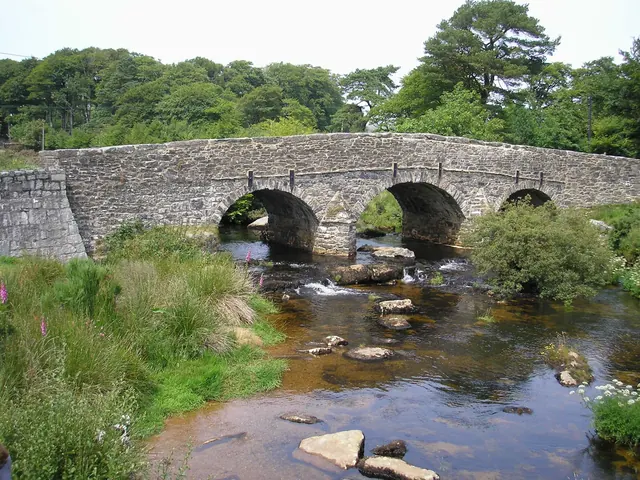
Two-arched granite county bridge of 1792 over the East Dart at Dartmeet, with a tablet reading County Bridge 1792 and a clapper bridge 20 metres upstream.
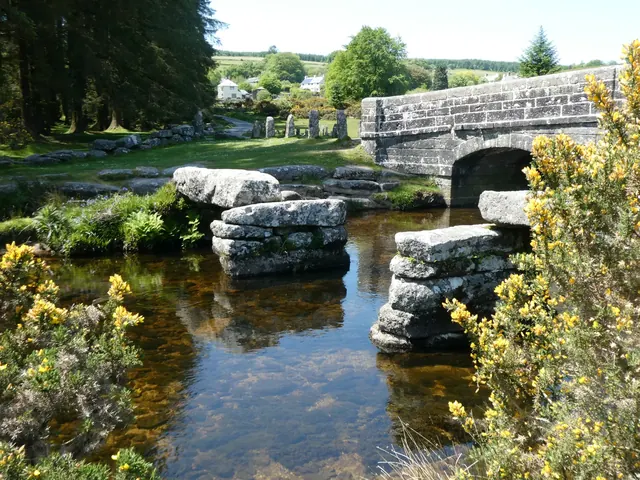
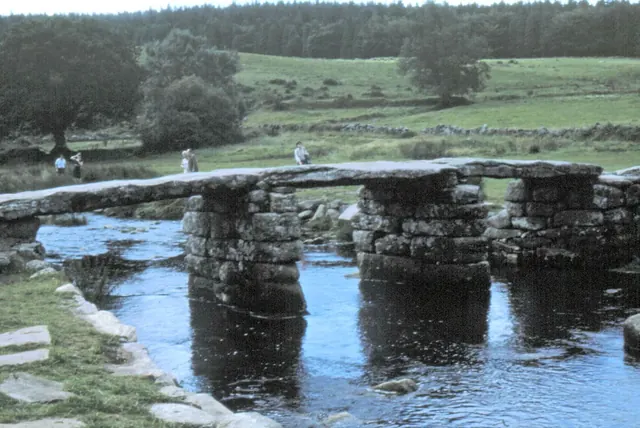
Broken clapper bridge of five spans over the East Dart at Dartmeet, 17th century or earlier, three of its slabs lost in the flood of 4 August 1826.
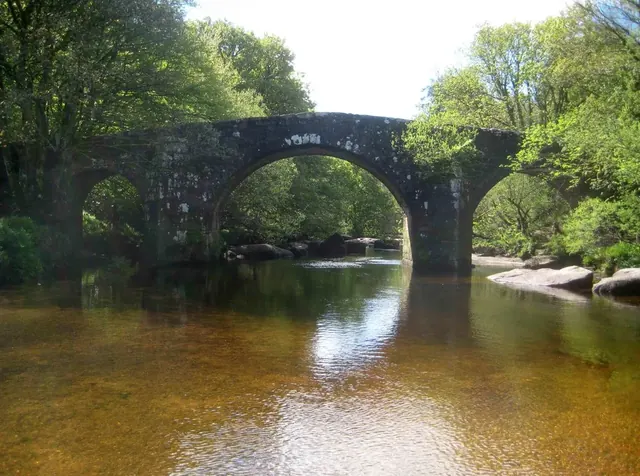
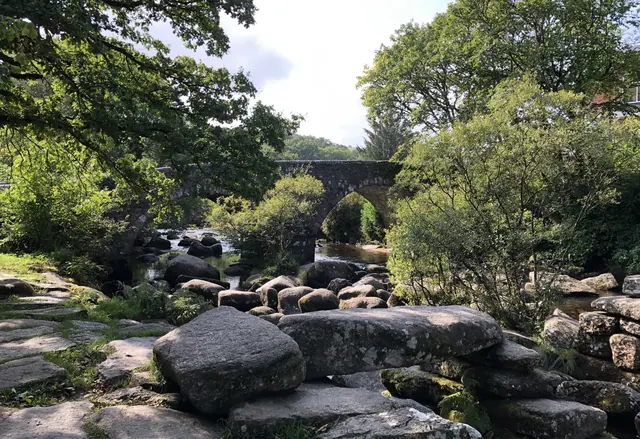
Late 18th-century three-arched granite bridge over the West Dart between Hexworthy and Huccaby, with county stones about 100 m either side.
Medieval-origin clapper bridge over the East Dart at Bellever, now with two of its lintels, beside an early 19th-century road bridge.
Dartmeet, Princetown
A four mile stream from near the Warren House Inn south to the East Dart at Babeny, partly forming the boundary between Teignbridge and West Devon.
Eric Hemery's history of the River Dart, from its Dartmoor source to the sea.
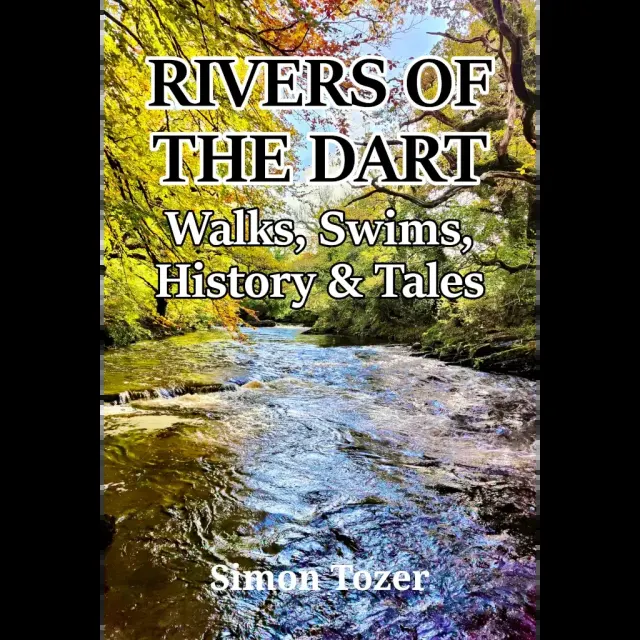
Simon Tozer's guide to every major tributary of the River Dart, from the high moor to the sea, blending landscape, history, circular walks and swim spots.
River Dart
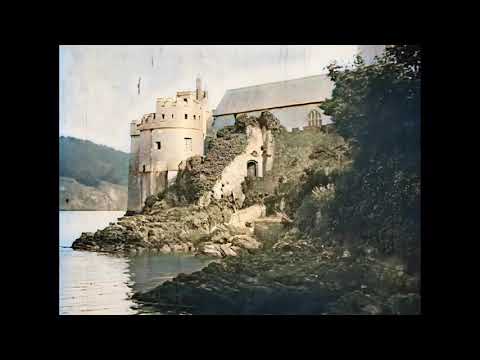
A short film showcasing Dartmouth, the River Dart, and scenes from Dartmoor over a century ago.
Sheepstor. Photograph by Glavind Strachan Photography“I solemnly swear to you, sir," said he, "nothing will ever induce me to set foot on Dartmoor again. If I chance to see it from the Hoe, sir, I'll avert my eyes. How can people think to come here for pleasure — for pleasure, sir! But there, Chinamen eat birds'-nests. There are depraved appetites ...”
Also on Our DartmoorHut circle near Swincombe — A stone hut circle 8 m across inside, with walls up to 2.7 m wide, on a north-west-facing slope above the Swincombe.