- Born: Exeter, 3 December 1856
- Died: 15 September 1914
- Trade: bookseller and publisher at 230 High Street, Exeter, from 1880 until his death
- Public office: city councillor from 1903, alderman, and Mayor of Exeter in 1908, the first mayor chosen by a cross-party committee
- Devonshire Association: member from 1900; Vice-President at the Exeter jubilee meeting of 1912
- Published: Devon Notes and Queries (later Devon and Cornwall Notes and Queries) from 1900; the 1896 edition of Rowe's Perambulation of Dartmoor; Eva C. Rogers's The Magic Mist (1900)
James George Commin came from a family that, in the Devonshire Association's words, had been citizens of Exeter for more than three centuries. His father, James Commin, was a solicitor and conveyancing barrister whose chambers stood where the tower of St Mary Major is now. He was apprenticed to Drayton and Sons, the High Street booksellers, and then to Sotheran and Co. of the Strand and Piccadilly in London, and came home to open his own shop at 230 High Street, Exeter, where he stayed for the rest of his working life. His obituary calls him no mere bookseller but a book-lover, with an exceptional knowledge of authors, titles, bindings and formats, and a shop with a world-wide reputation.
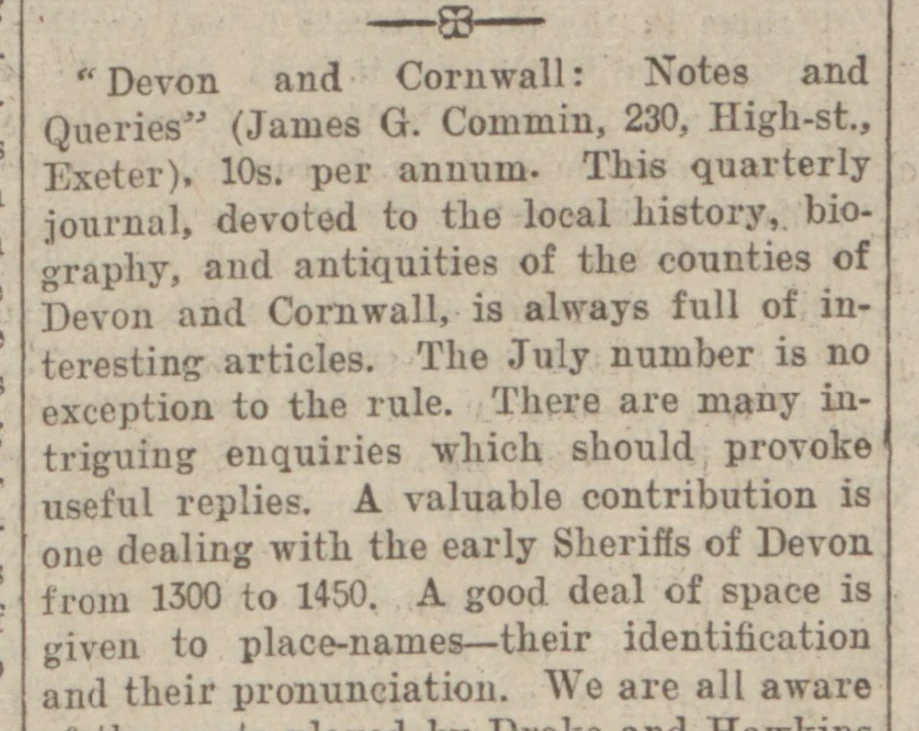
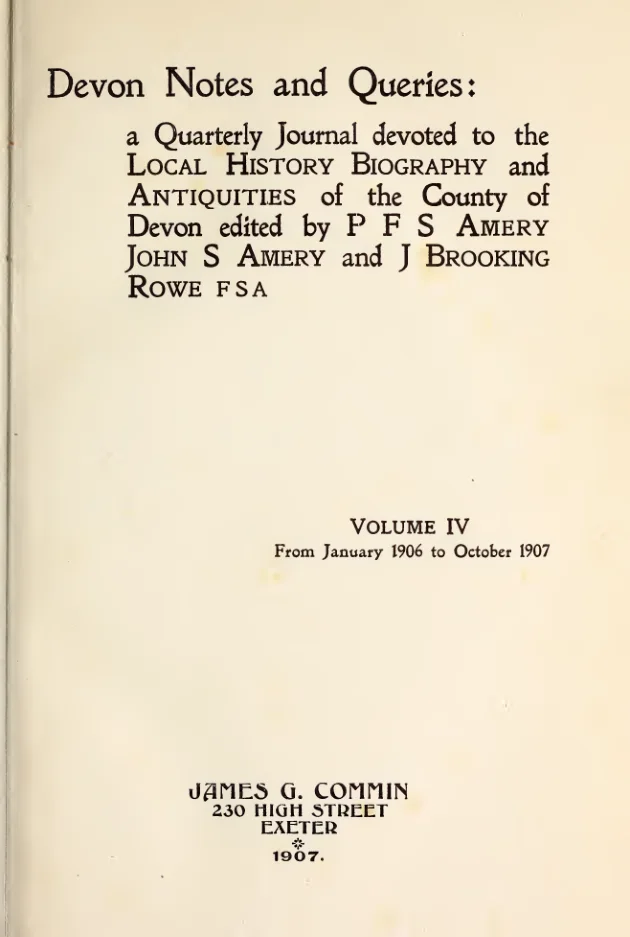
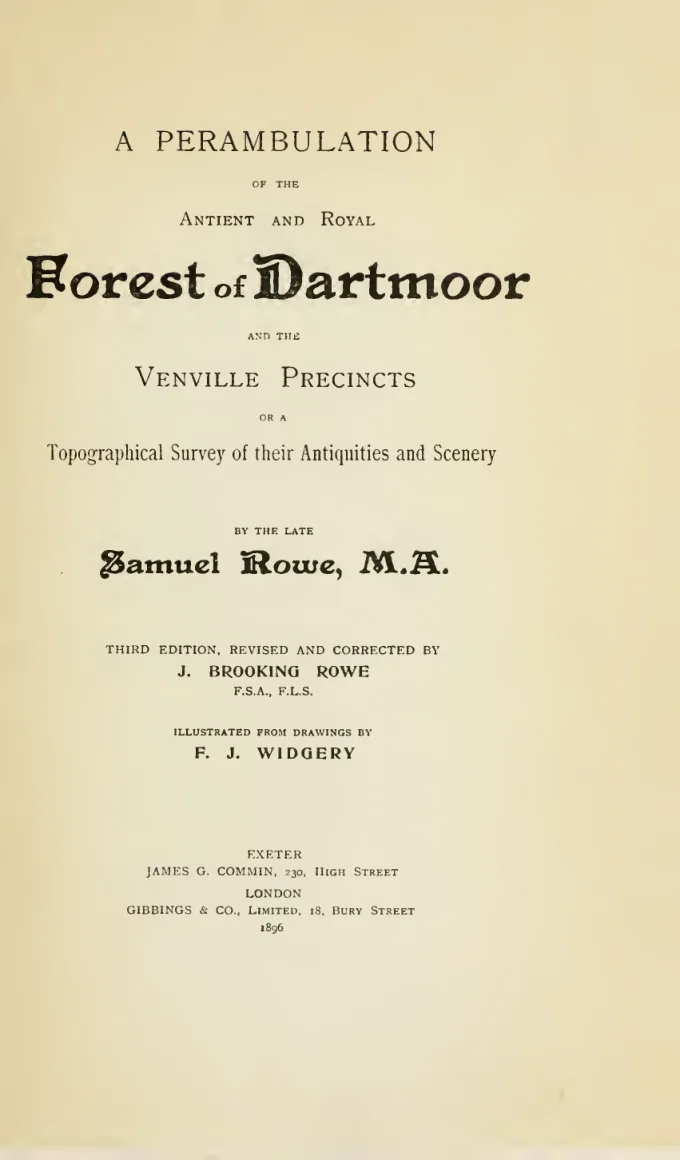
He was also a publisher of Devon's local history. In 1900 he took on Devon Notes and Queries, a quarterly journal of the history, biography and antiquities of the county, later Devon and Cornwall Notes and Queries; the volumes of 1900 to 1909 name P. F. S. Amery, John S. Amery and J. Brooking Rowe among the editors, and the Association's obituary credits the journal's success mainly to his enterprise. He published the third edition of Samuel Rowe's Perambulation of Dartmoor, edited by Brooking Rowe, and Lady Rosalind Northcote's Devon: Its Moorlands, Streams and Coasts, illustrated with water-colours by his friend F. J. Widgery. The obituary adds that he printed a large number of local monographs of great value to antiquaries that can have earned him little.
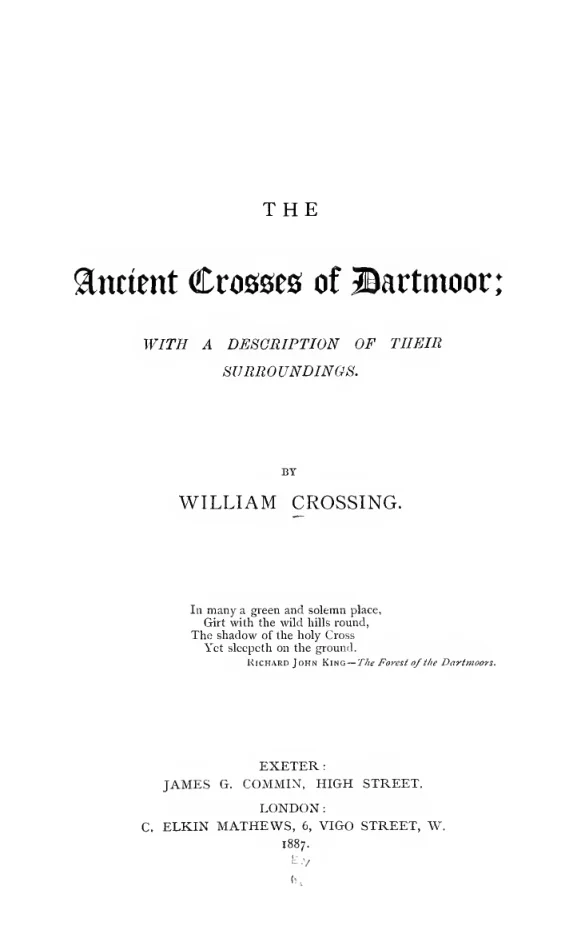
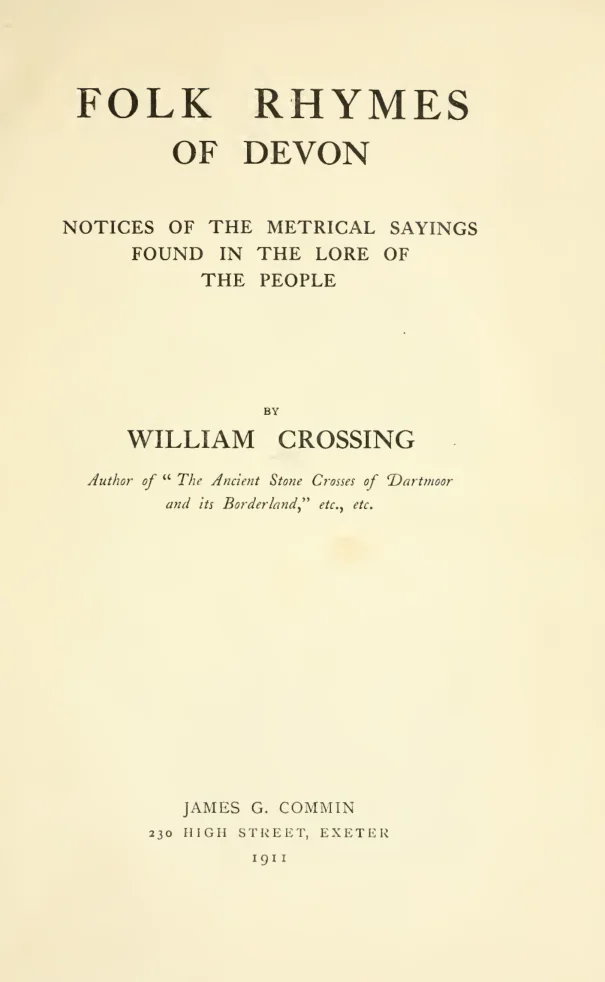
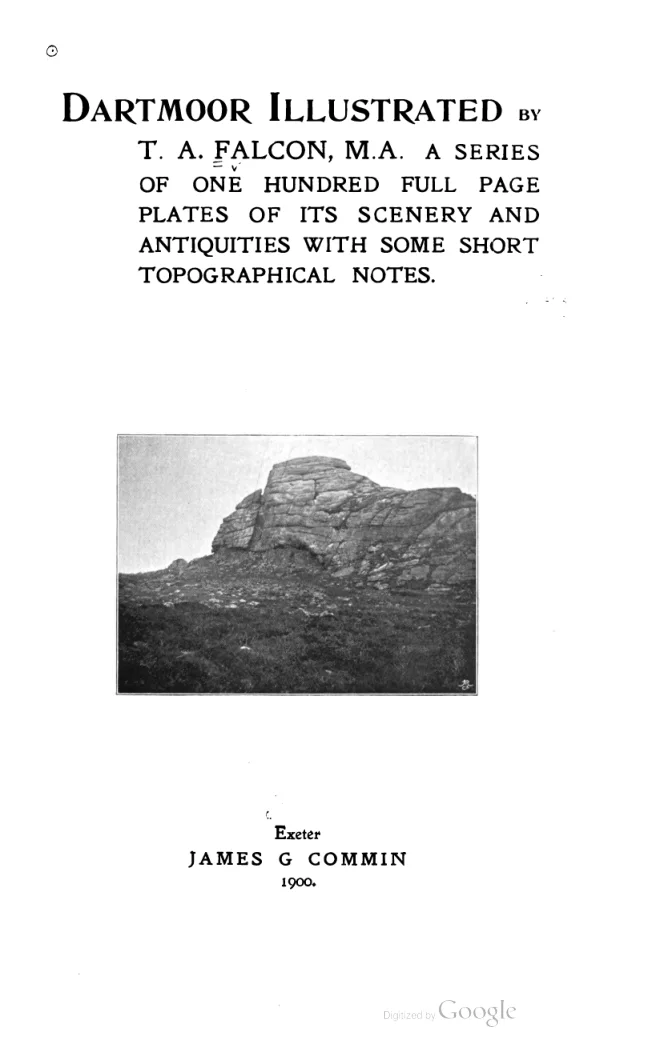
His imprint is on a good part of the Dartmoor shelf. The title pages of the books in our Library carry it on William Crossing's The Ancient Crosses of Dartmoor (1887), on its enlarged successor The Ancient Stone Crosses of Dartmoor and its Borderland (1902), and on Crossing's Folk Rhymes of Devon (1911); on T. A. Falcon's Dartmoor Illustrated (1900); on Sabine Baring-Gould and Robert Twigge's An Armory of the Western Counties (1898); on Brooking Rowe's History of the Borough of Plympton Erle (1906); and on R. Pearse Chope's Early Tours in Devon and Cornwall (1918).
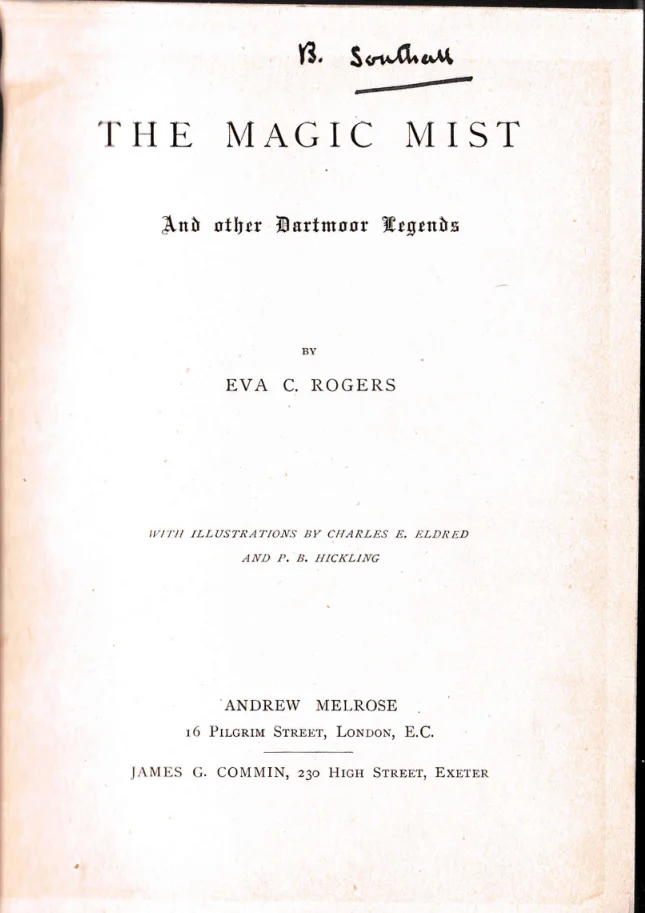
His Dartmoor list also included a book of fiction. The Magic Mist, and other Dartmoor Legends by Eva C. Rogers, with a prefatory note by Robert Burnard, came out for Christmas 1900 under the joint imprint of Andrew Melrose of London and James G. Commin, 230 High Street, Exeter. Rogers and Burnard were both members of the Devonshire Association, which Commin joined in 1900.
He became a member of the Devonshire Association in 1900, and it was through him that the Association was invited to hold its jubilee in 1912 at Exeter, where it was founded; he was one of the Vice-Presidents that year. He supported the Exeter Literary Society and sat on the governing body of the Albert Memorial Museum and College (now the Royal Albert Memorial Museum), gave it many books, and was largely responsible for its acquiring the Fisher Library and for the bequest of the library of J. Brooking Rowe.
The trade paper The Bookseller called him one of the best-known booksellers in Exeter, who began on his own in the High Street in 1880 and gradually built a widespread reputation. He long refused to enter the City Council, but was elected in 1903 as an independent and was soon made an alderman at the invitation of the Liberal party on the council. He proposed that the mayoralty should stop being filled at the bidding of the dominant party, and that the mayor should instead be chosen by a selection committee drawn from both parties; he was the first mayor elected under that system, in 1908. His year included the visit of the Prince and Princess of Wales, later George V and Queen Mary, and the Bath and West Show at Exeter, and during a time of considerable distress he raised a relief fund of about 600 pounds.
He was in poor health for his last three years and died at his Exeter home on 15 September 1914, a widower: his wife, a daughter of Mr Webber of Hills Court, Longbrook Street, had died some years before him. The Dean of Exeter paid tribute in a sermon at the Cathedral, speaking of a life of singular graciousness and beauty, marked by independence of character and a striking modesty. He left two sons, who carried on the business, and two daughters. His obituary is in the Transactions for 1915 (vol. 47, pages 43 to 44).
Sources: Obituary notice, Transactions of the Devonshire Association, vol. 47 (1915), pages 43 to 44 | Obituary, The Bookseller, 25 September 1914, page 8 | Grace's Guide, James George Commin | Title page of The Magic Mist and other Dartmoor Legends (1900).