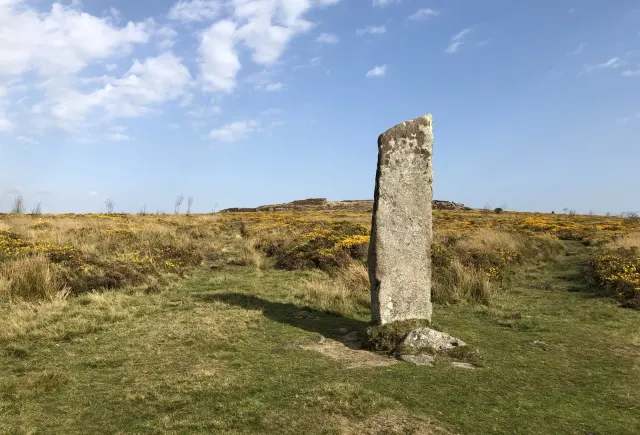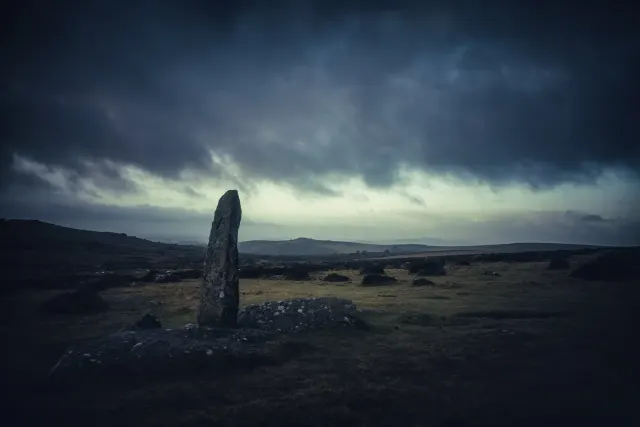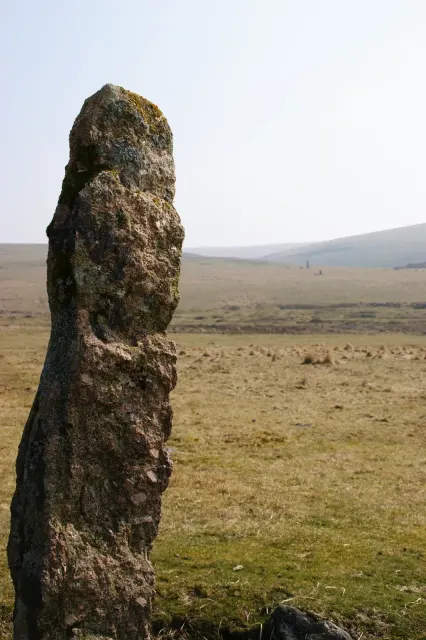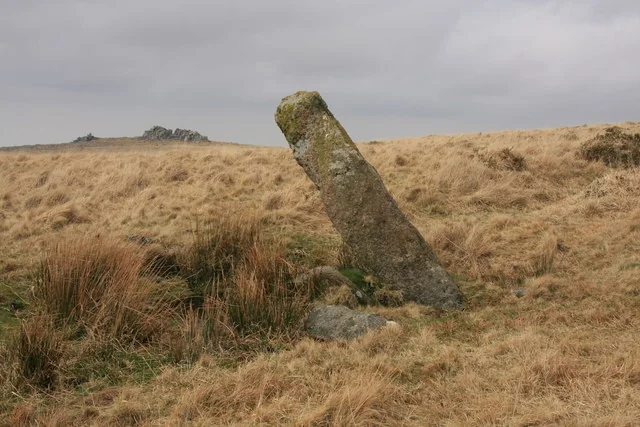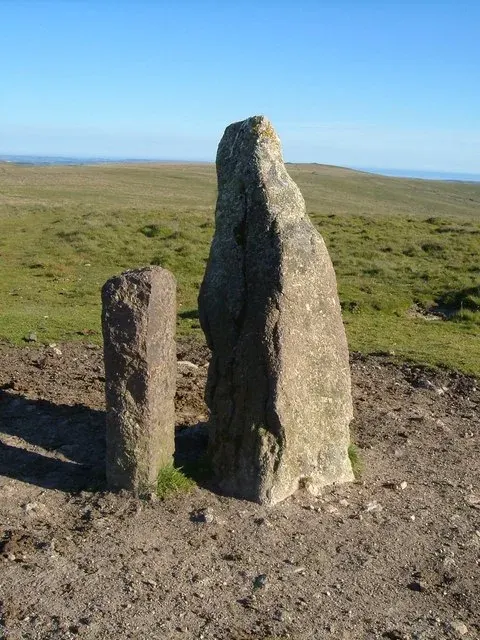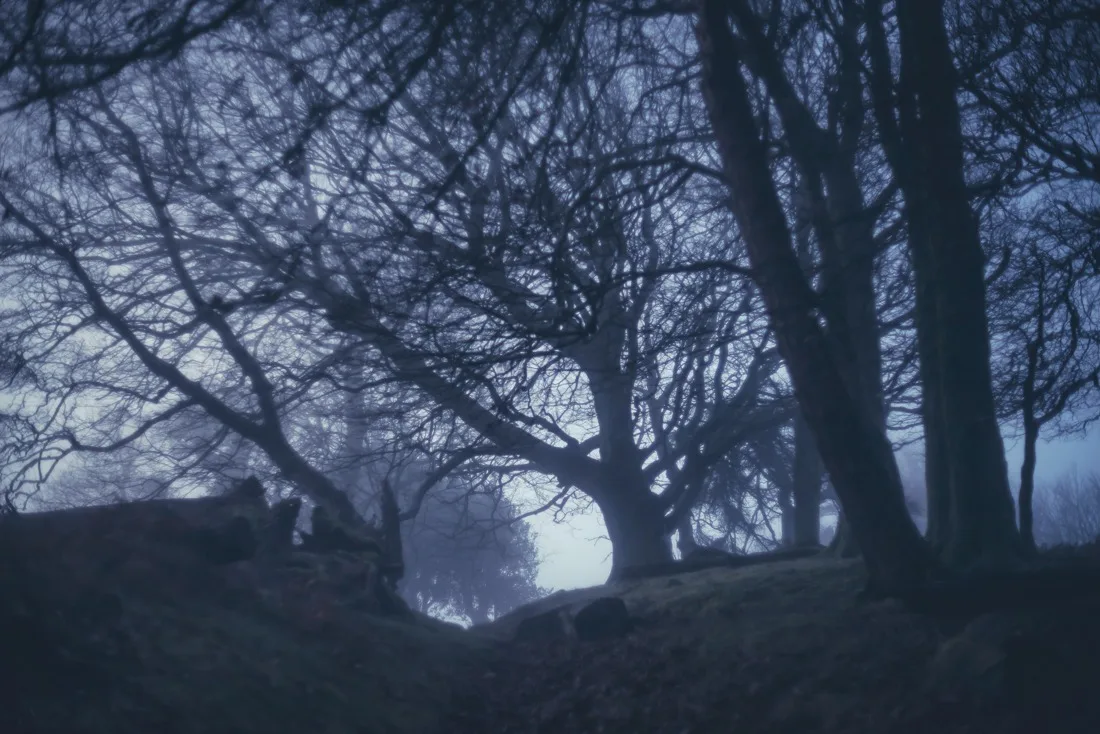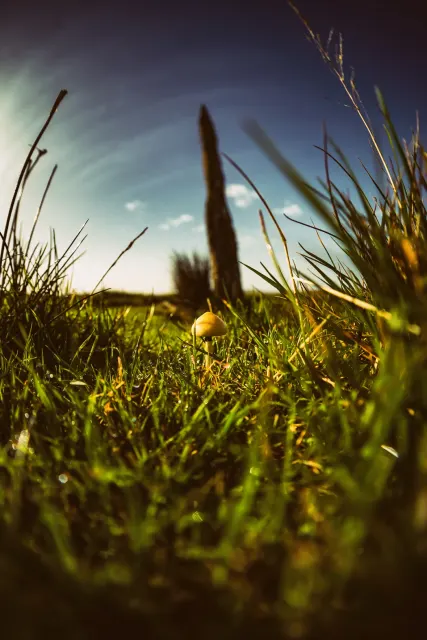
Beardown Man
Single Bronze Age standing stone (menhir) about 3.5 metres high, on high moor near Devil's Tor at 542 metres. It stands higher above sea level than any other menhir on Dartmoor.
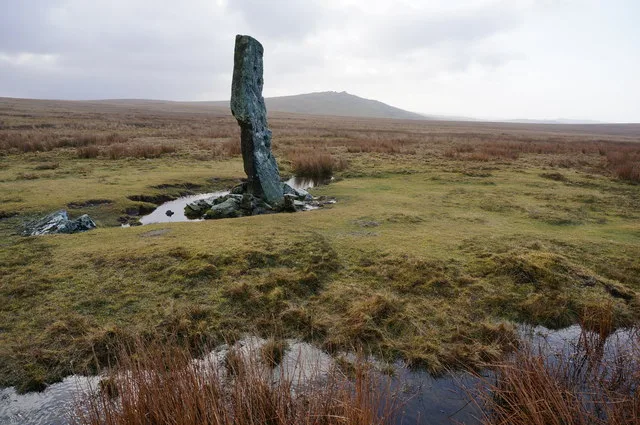
Peter Tavy, Tavistock
A 2.76 m standing stone on Langstone Moor, re-erected in 1893 in its original socket and marked by bullet holes from wartime target practice.
Sheepstor, Tavistock
Haunting remains of a medieval manor house scattered across open moorland, revealing centuries of occupation and abandonment.
The remains of Longstone Manor House on a promontory in Burrator Reservoir: an early 17th-century house 14.5 m by 6.5 m with walls up to 4 m high, a sunken cobbled track, outbuildings under the waterline and a granite wind strew dated 1637.
Babeny, Ashburton
Bronze Age stone circle and hut settlements scattered across open moorland, revealing how ancient communities lived on Dartmoor's high ground.
A 3.2 m granite standing stone on Longash Common, the tallest of the Merrivale monuments, with a small cairn, a fallen stone and a short line of stones beside it.
A solitary standing stone on open moorland, marking ancient presence on the high plateaus of Dartmoor.
Lee Moor, Plympton
A leaning prehistoric standing stone on Lee Moor, cut with the letters C B as a boundary mark, listed among Dartmoor's sheep-stealer hanging stones.
Harford, Ivybridge
A coarse pink granite stone at the northern end of the Butterdon Hill stone row on Piles Hill, near South Brent, with an 1803 boundary stone beside it.
Photograph by Glavind Strachan Photography“Tom Pearce, Tom Pearce, lend me thy grey mare, / All along, down along, out along, lee. / For I want for to go to Widdecombe Fair, / Wi' Bill Brewer, Jan Stewer, Peter Gurney, Peter Davy, / Dan'l Whiddon, Harry Hawk, / Old Uncle Tom Cobleigh and all.”
Also on Our DartmoorHamel Down strip fields — Medieval strip fields on the lower west slope of Hamel Down, with a barn platform 19.5 m long, three small openworks, five small prehistoric settlements (one dug in 1938) and a 13.4 m cairn.