

R.A.F. Harrowbeer 1941 – 1945. A Fighter Aerodrome on Dartmoor, now an Archives, Educational and Heritage Centre.
By Michael Hayes (Archivist)
R.A.F. Harrowbeer was a Second World War fighter aerodrome on Roborough Common, beside Yelverton on Dartmoor. It officially opened on 15th August 1941 and finally closed as an operational fighter station on 31st July 1945. Here Michael Hayes tells its story, and how a search for a small tearooms led him to it.
How a Yelverton tearoom led to R.A.F. Harrowbeer
Firstly, I should introduce myself. My name is Michael, (the author of this article) and my wife is Lucy Hayes. Back in 1996 my wife and I needed a change in our life style. We lived on the outskirts of London and the pace of life was so hectic, you felt that you were not a person but a number, you were not appreciated you were an item, something had to be done to experience a better life-style. My mother had a dream of when dad retired, they would try and find a cottage in the West Country with roses round the front door, lush green lawns and serve cream teas on them. Sadly, it never worked for them. So, this gave us our starting point – can we achieve what didn’t happen for them. Sounds like quite a challenge but surely, it’s got to be worth a try.
We started by looking for a small Tearooms with a couple of rooms for Bed and Breakfast guests that would see us into our retirement. After an exhausting search our opportunity came to purchase such a place in Yelverton, Devon on the edge of Dartmoor and we moved from Redhill, Surrey in April 1997 to start a new life.
We soon learnt from a customer that the square tower built on the side of our Victorian building was locally known as the ‘Original Watch Office’ and the area outside was the remains of a World War Two Aerodrome known as R.A.F. Harrowbeer.
I must tell you that I have no military background or even had any interest in anything military up until this point. I thought that the square tower was a folly and what I now know are aircraft dispersal bays were picnic areas put there by the Council as wind breaks with a concrete pad for your bar-b-que. How naive was I.
Curiosity got the better of us and we needed to know more about our new location. What was the history of the Aerodrome? What squadrons operated from here? What were they doing? Who were they and what did they do in their leisure time? etc. An interest that become a hobby, so our research had begun, we were hooked.
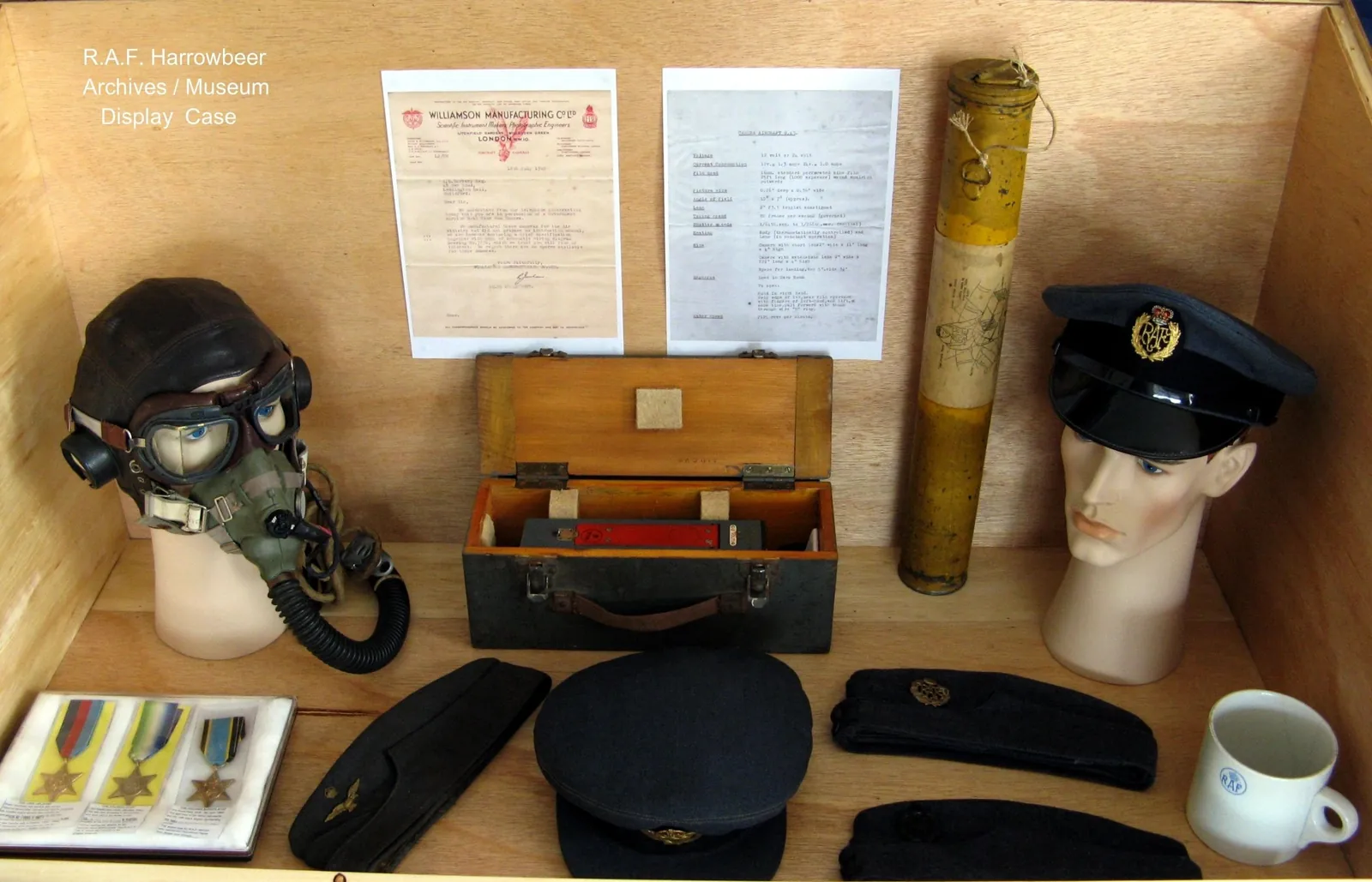
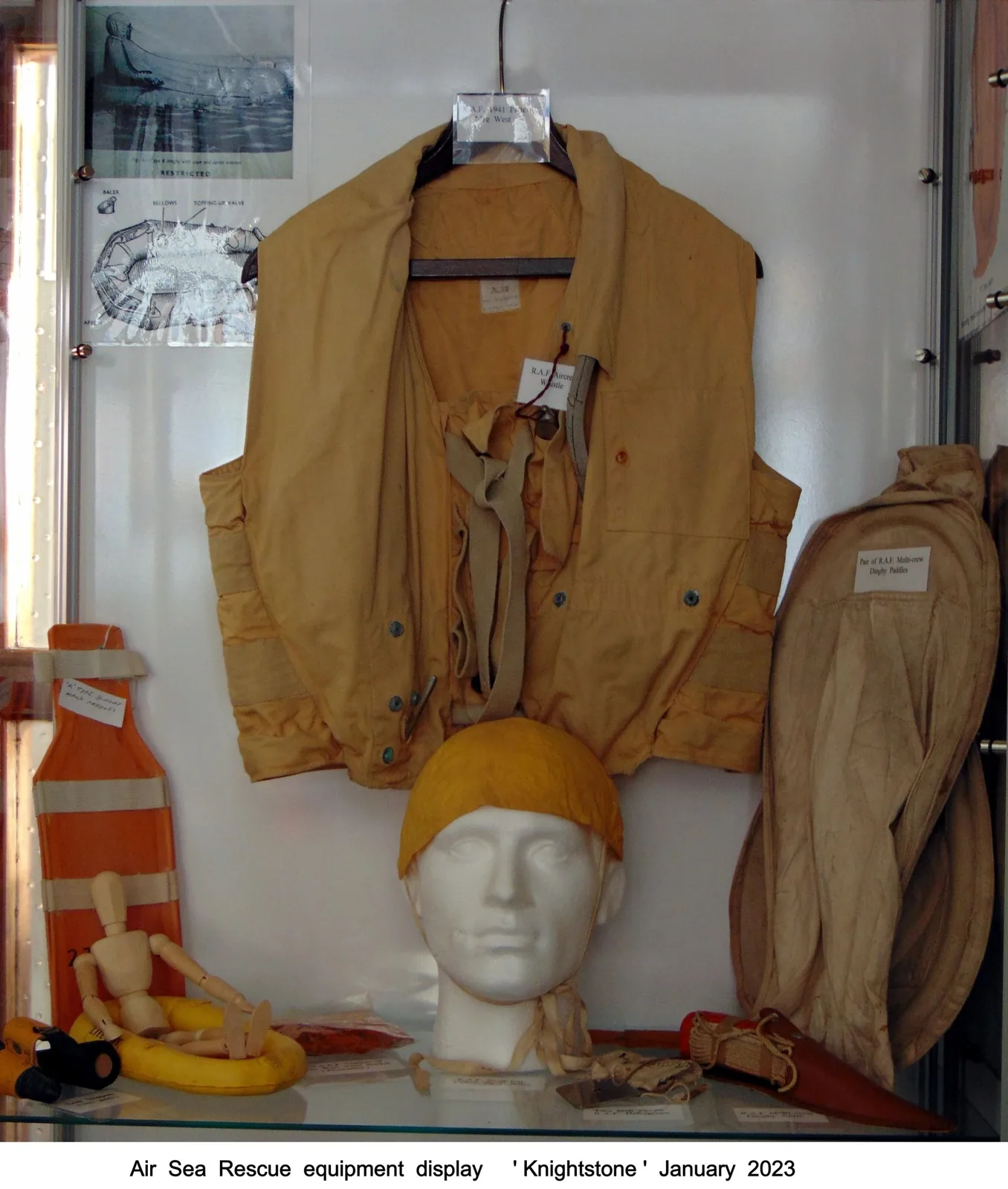
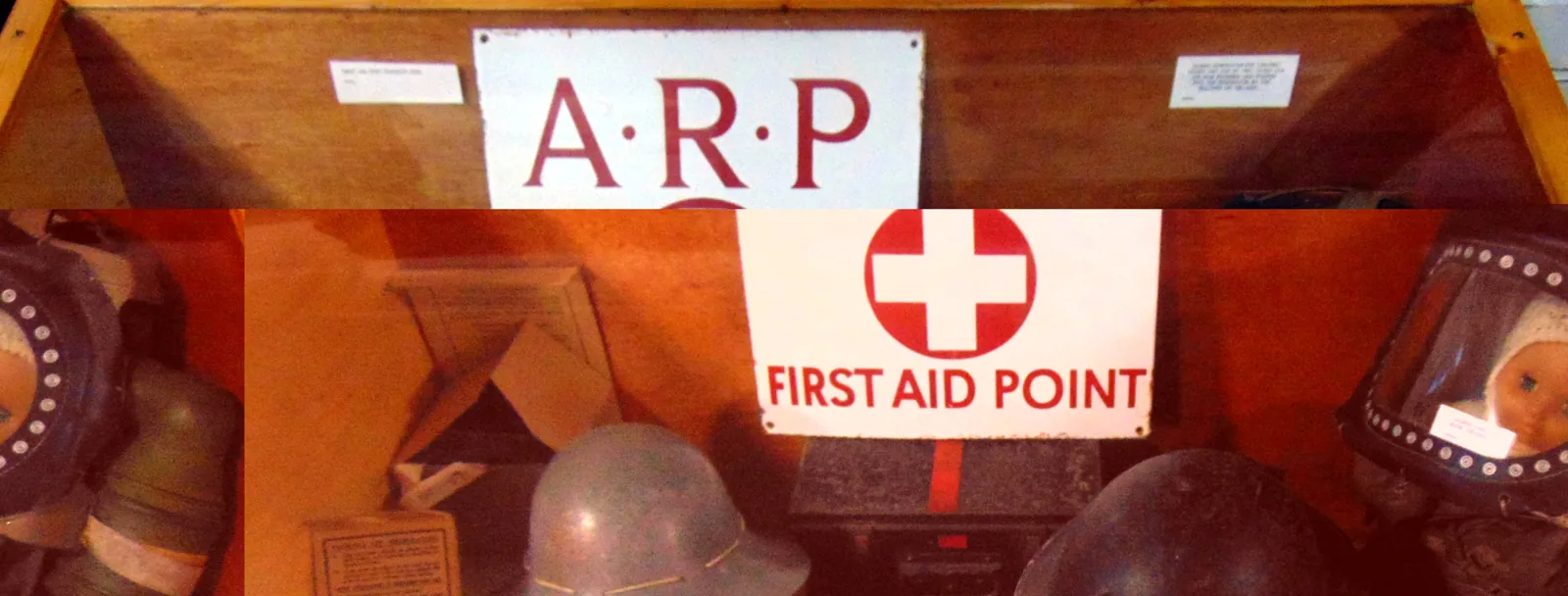
Our research has led to the development of the ‘R.A.F. Harrowbeer Archives, Educational and Heritage Centre’ incorporating Knightstone Tearooms. On site is a small museum with artefacts and memorabilia, an archive of the Station and Squadron Operation Record Books (connected to Harrowbeer) plus photographs and documentation.
This was an interest that became a hobby, went to be a passion and finally an obsession.
I have a very understanding wife who is a great help in the research department.
Where was R.A.F. Harrowbeer, and what happened there?
R.A.F. Harrowbeer was situated approximately nine miles north of Plymouth, half a mile to the west of Yelverton on Roborough Common (Dartmoor) at grid reference SX513680.
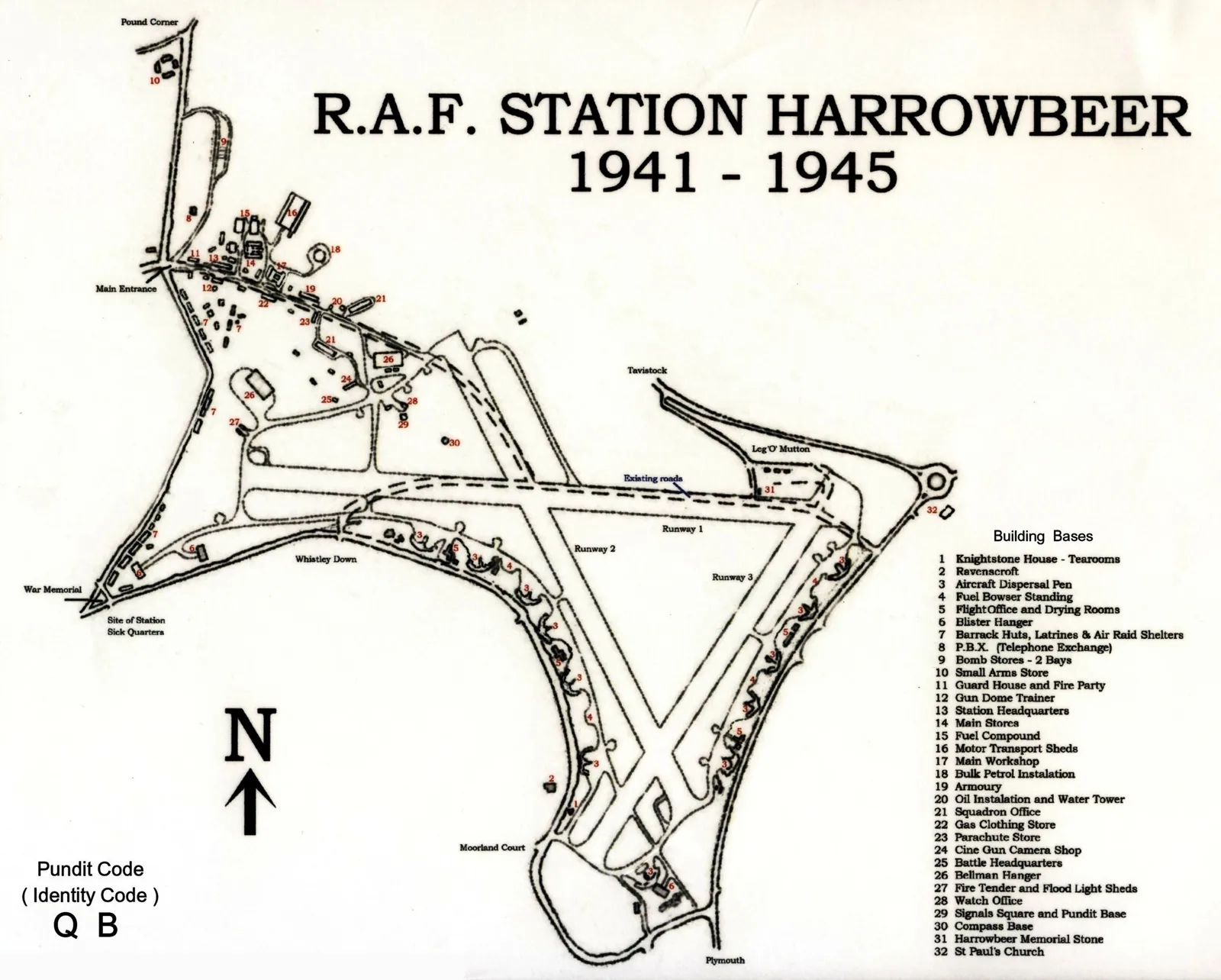
All that remains today of the old second world war aerodrome is the ‘Old Watch Office’ (now Knightstone Tearooms / R.A.F. Harrowbeer Archives Educational and Heritage Centre). Across the road is Ravenscroft (now Hart Care Residential Home) which was originally the billets for the aerodrome defence, then the ‘Officer’s Mess’ until February 1943 when it became the Headquarters for No.276 Air Sea Rescue Squadron until April 1944. On the business park at Crapstone can be seen the ‘Gas Decontamination Block’ (now Trimal House). Walking around the area you can see the remains of approximately 110 airfield buildings out of 127, air-raid shelters and dispersal pens (for the aircraft). Many of these are linked together by the old perimeter tracks and roads that have been laid over sections of the old runways.
I firmly believe that, prior to Harrowbeer opening officially on 15th August 1941, there was an aerodrome on this site as early as the middle of 1939 with grass strips. Many buildings were knocked down at the end of 1938 and early 1939 which included Udal Tor (a T.B. Sanitorium) and the Moor House Hotel. Knightstone House (as it was known then) was requisitioned in 1937 by the Secretary of State for Air along with several other buildings and also the area of Roborough Common adjacent to them. It would have been at this time that the square tower was added to Knightstone House which was used for administration work and as a watch office. I believe Gloster Gladiator aircraft were operating from here on night exercises after war was declared (No.247 Squadron). I have spoken to W.A.A.F.’s who came here in 1939 to carry out administration duties and also Armourers and Airmen who serviced the aircraft. They would come here from St. Eval in Cornwall, do their duty and return to St. Eval. When the W.A.A.F. was asked ‘what was the aerodrome called?’ She replied it had no name or number, it was always referred to as the ‘top secret aerodrome at Yelverton’!
R.A.F. Harrowbeer was a fighter station under the command of No.10 Group which was responsible for the South West of England. It was built with three tarmac runways, the foundations of these and many of the buildings being on the rubble from Plymouth after the ‘Blitz’. The rubble was transported by rail to Yelverton railway station and then by road to the aerodrome site in May 1941. R.A.F. Harrowbeer officially opened on the 15th August 1941 at 1430 hours.
The first aircraft to land at Harrowbeer was on 31st August 1941 piloted by Wing Commander Walter. This was followed by a temporary attachment of No.500 squadron Blenheim IV L aircraft on 15th September until 6th October. It was on this day that No.302 (Polish) Squadron arrived with Spitfire VB and Hurricane aircraft and operational training commenced. They were joined on 25th October by No.130 Squadron flying Spitfire II aircraft.
At the end of September Wing Commander, the Hon. E.F. Ward arrived and assumed command of the station.
On the 21st October No.276 A.S.R. Squadron was formed within Knightstone House which was also their H.Q. until February 1943 when they transferred over to Ravenscroft.
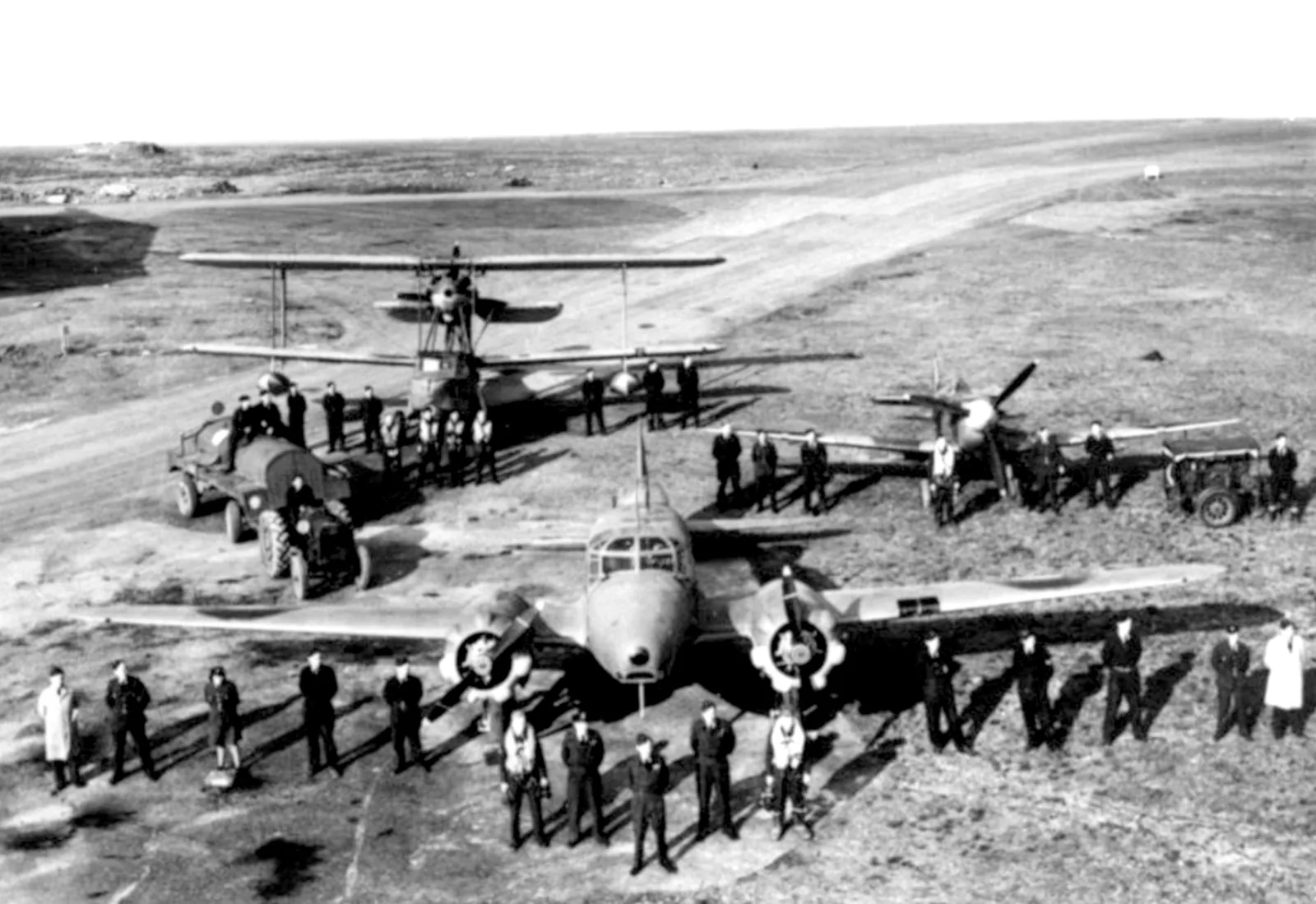
Over the next few months many high-ranking officers were to visit Harrowbeer including H.R.H. the Duke of Kent and H.R.H. the Duke of Gloucester.
R.A.F. Harrowbeer’s immediate role was to escort shipping in the English Channel offering protection against the German U-boats and E-boats. This progressed and in early 1942 they also undertook escorting bombers over to France and back.
October 10th saw the arrival of No.175 Squadron with their Hurricane / bomber aircraft which carried out low level shipping strikes.
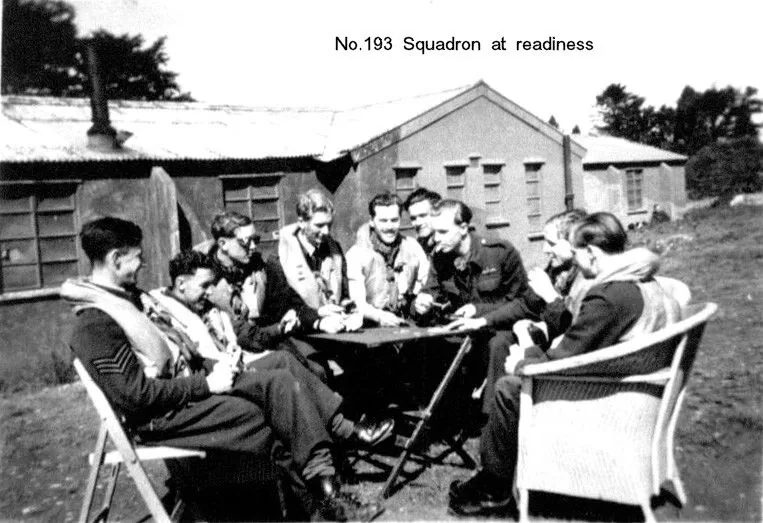
No.193 Squadron was formed at Harrowbeer on 18th December 1942 and took delivery of four Hurricanes and three Typhoon aircraft on 14th January 1943. After local familiarisation flights they assisted Nos.263 and 266 squadrons with bombing attacks on railways and airfields in France.
The number of personnel on the airfield as at 1st January 1943 was 2,028.
From early 1944 Harrowbeer’s Typhoon aircraft were converted to carrying rocket projectiles which were used on concentrated attacks to shipping, radar and communication sites in France.
On 31st August 1944 R.A.F. Harrowbeer was placed on ‘Care and Maintenance’, however on January 8th 1945 it re-opened again as R.A.F. Station Harrowbeer, a self-accounting unit, finally closing as an ‘Operational Fighter Station’ on July 31st 1945.
R.A.F. Harrowbeer was taken over by the Americans on 1st September 1944 until the beginning of January 1945. We have no records of what Units / Groups were here, what aircraft were they flying and what duties were they carrying out!
On the 2nd August 1945 President Truman landed at R.A.F. Harrowbeer on his way to meet King George VI on H.M.S. Renown in Plymouth Sound, regarding the Potsdam Conference. The aerodrome was officially closed, his reception party was three W.A.A.F.’s.
August 15th 1981 saw the return of R.A.F. Harrowbeer’s first Station Commander the Hon E.F. Ward and other station personnel for the unveiling of a granite memorial stone at the Leg O’Mutton corner, Yelverton as a tribute to all who served at R.A.F. Harrowbeer.
R.A.F. Harrowbeer Archives, Educational and Heritage Centre
‘Knightstone Tearooms’ was run as a successful restaurant and tearooms from 1997 until 2016 when my wife and I decided to hang up our aprons and retire (both being over 70 years old). Our big question was what should we do and how do we go about it. We live on the premises and definitely did not want to move from such a wonderful location and the research on R.A.F. Harrowbeer is far from complete. We took the decision to stay put and leased the restaurant and tearooms part of the building out to a tenant. This worked well for approximately five years and the research continued with various ‘open days’ and I would talk to interested groups and members of the public about R.A.F. Harrowbeer. The tenant decided that the time had come for them to move on which again left us with trying to find a new tenant. Due to the Covid and the economic climate the end of 2022 was not a good time to venture into a project involving cooking etc. with the price of gas and electricity an unknown quantity.
About this time a lot of primary schools were interested in day visits to the Archives to cover their requirements for studying the Second World War. We already had an Educational Pack for Schools in place that covers the various Key stages of the Primary School Curriculum with suggested risk assessment forms etc. so we decided to reopen as an ‘Archive, Educational and Heritage Centre’. Part of the week is set aside for school visits, clubs and organisations wanting to know about R.A.F. Harrowbeer and it’s role in the Second World War, and the artefacts are added to constantly.
We welcome anybody who has a story to tell of their experiences of Plymouth and surrounding area during the blitz and especially those or their relatives who served or had a connection with R.A.F. Harrowbeer during WWII.
More about the centre, including how to get there and when it is open, is on its Our Dartmoor listing and on its own website, www.rafharrowbeer-dartmoor.org.uk.
What is in the R.A.F. Harrowbeer Archives?
A few other items of interest include:
- 1942 Austin Ten Utility vehicle that served in Malta with the Army.
- 1934 Austin Seven ‘Ruby’ registered in Plymouth, became an A.R.P. Car in 1939 was shot by the Germans in 1941 (the Blitz). Restored to running condition.
- 1942 Airborne Lifeboat Mark IB – good condition awaiting restoration.
- 1940 Tricycle used for training Polish and Czech pilots in formation flying.
- Anderson Shelter with bunk beds, Morrison Shelter – an indoors Air Raid Shelter.
- Air Raid Warden’s Post with telephone, desk, stirrup pumps, incendiary rake and shovel, buckets and spades, etc.
- Alan Williams Anti-Aircraft Gun Turret.
Also on Our Dartmoor: the Typhoon crash at St Paul's Church, Yelverton, May 1944, and Roborough Rock, at the southern end of the former airfield. The separate website rafharrowbeer.com is dedicated to those who served at R.A.F. Harrowbeer.
Frequently asked questions
What was R.A.F. Harrowbeer?
Where was R.A.F. Harrowbeer?
When did R.A.F. Harrowbeer open and close?
What can still be seen of R.A.F. Harrowbeer?
Did President Truman land at R.A.F. Harrowbeer?
Who wrote this history?
What is Our Dartmoor?
What else can I find on Our Dartmoor?
How can I contribute to Our Dartmoor?