← Browse Historical Figures · Browse the directory
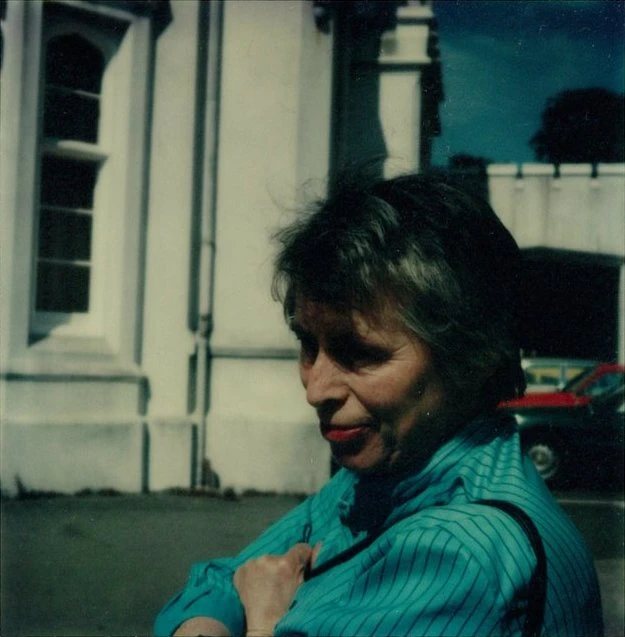
Theo Brown
Theo Brown (1914-1993) was born Jean Marion Pryce in London and adopted as a child by the Langford Brown family of Barton Hall, Kingskerswell, in south Devon. She trained as a wood engraver at the Westminster School of Art under Mervyn Peake, and served as a petty officer in the Women's Royal Naval Service during the Second World War.
A chance meeting with the classical scholar W. F. Jackson Knight around 1945-46 turned her toward folklore and comparative religion. Exeter University's own catalogue of her papers dates her taking over as the Devonshire Association's recorder of folklore to 1952; the Devonshire Association's own page instead records her joining the Association in 1946 and founding its Folklore Section in 1957, crediting her with thirty years as Recorder for Folklore overall. Both are the institutions' own stated dates rather than a single agreed timeline, so both are kept here rather than picked between. Either way, she spent decades gathering Dartmoor traditions first-hand, reportedly sometimes camping by the roadside to do so, work recognised with the Folklore Society's Coote Lake medal (1983) and the Maxwell Fraser Award (1988). She also worked as a visual artist, and her folklore recording was accompanied by her own woodcuts and sketches. Her books include Tales of a Dartmoor Village, concerning Postbridge, Devon Ghosts, and The Fate of the Dead, her main scholarly work, published before a stroke in 1978 curtailed her research. She continued teaching at Broadclyst Primary School and writing a parish magazine column until her death in February 1993.
Exeter University holds her research papers as EUL MS 105, a 38-box collection of notebooks, maps, correspondence, file-cards and photographs organised thematically, including a box specifically covering Postbridge and the Warren House Inn. A separate collection, EUL MS 388, holds further woodcuts, sketches and material relating to Dartmoor's black-dog traditions.
One object connected to her research is held by Exeter's RAMM museum: an iron crock associated with Elizabeth Webb of Postbridge, passed to Brown by Webb's grandson, who said it was used for pitch to treat cattle horn damage. The museum catalogue links the object to Webb's local reputation as a charmer; that is a record of local reputation and folklore, not a claim that the object itself has any special power.
In 2014 the Folklore Tapes project spent nine months retracing Brown's Dartmoor research, producing a multimedia box set of seven vinyl records, a short film and a booklet of tale transcripts, alongside postcard reproductions of her woodcut prints recovered from the Exeter archive. Brown herself received mixed treatment from academic folklorists during her career, in part over her lack of formal training, though this dossier treats that as the project's own characterisation rather than settled fact.
Photograph of Theo Brown outside Exeter University library, 15 July 1982, by Charles.bowyer, used under CC BY-SA 4.0 via Wikimedia Commons.
Kind words
Be the first to leave kind words for Theo Brown.
Leave kind wordsKnow a Dartmoor person we should feature? Suggest a listing, it is free.
Suggest a listing