Lower Jurston Farmhouse Including Garden Walls to South
A grade II* listed farmhouse with surviving garden walls, likely medieval or early modern in origin, standing on Dartmoor's slopes.
Listed buildings and historic structures - churches, farmhouses, bridges, mills and the like.
A grade II* listed farmhouse with surviving garden walls, likely medieval or early modern in origin, standing on Dartmoor's slopes.
A Grade II* listed manor house with period terraces.
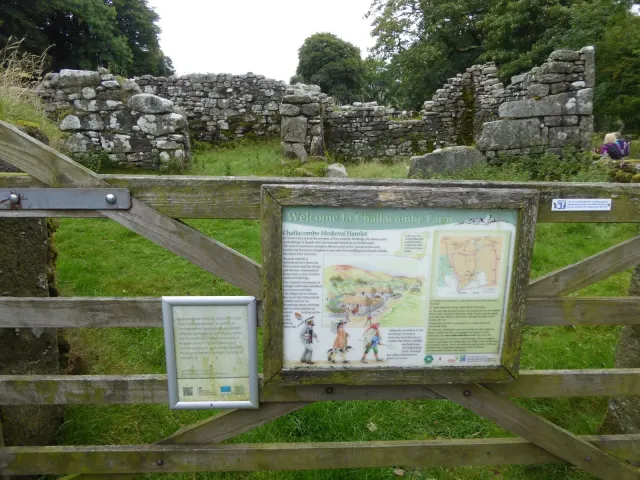
Challacombe, Chagford
Haunting stone foundations scattered across windswept moorland, where a medieval farming community once sheltered from Dartmoor's unforgiving climate.
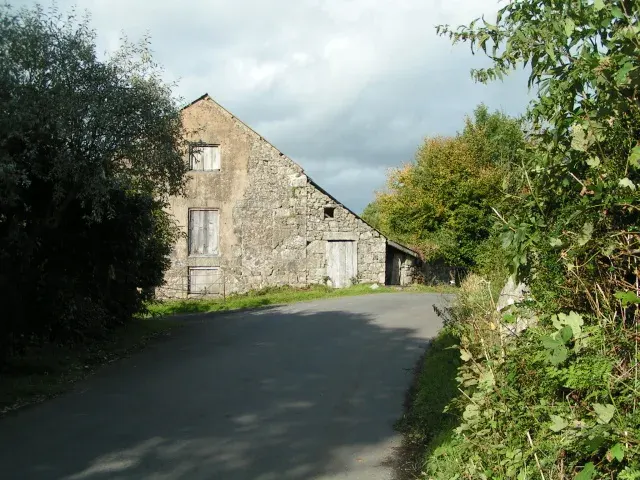
A Grade II* listed farmhouse with its front garden wall, standing on Dartmoor with roots in the post-medieval farming tradition.
Middleworth farmstead above the Narrator Brook, first recorded in 1281 and lived in until the 1920s: a farmhouse 8.6 m by 7.5 m with its walls up to 1.7 m high, a barn of five rooms and a privy.
Okehampton
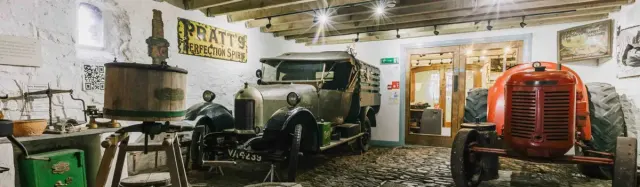
Situated in a cobbled courtyard in Okehampton, the museum exhibits a vast collection of objects spanning 5,000 years of life on Dartmoor from the Bronze Age through to the mid-20th Century.
Venton, Ashburton
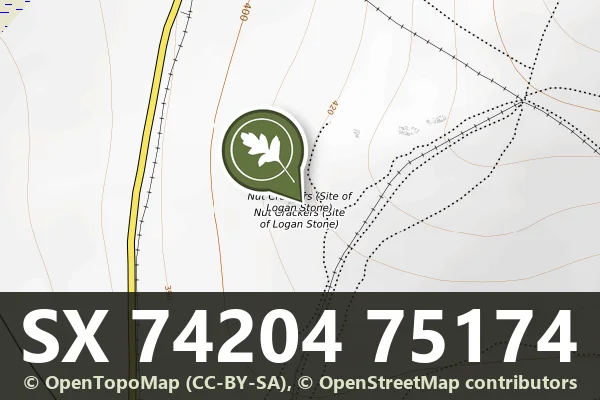
Scattered granite blocks on open moorland marking the site of a famous logan stone, moved centuries ago.
A Grade II* listed schoolhouse standing near Yeo Farmhouse, likely built in the 18th or 19th century on the northern Dartmoor moorland.
Okehampton
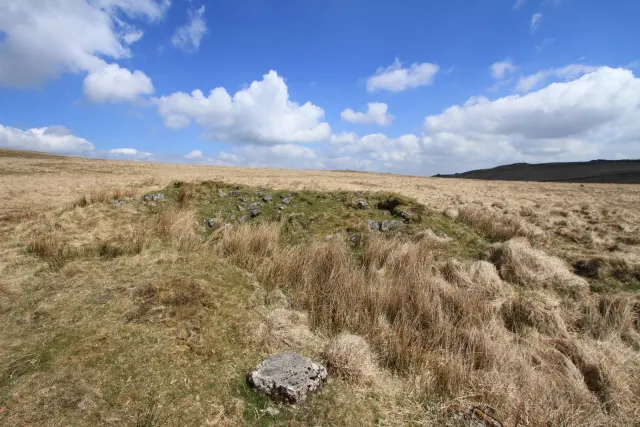
Weathered stone ruins standing alone on the open moor, a tangible remnant of human habitation in Dartmoor's sparse landscape.
Photograph by Glavind Strachan Photography“I have known many instances of people, well acquainted with certain parts of the moor, losing their way in a mist and wandering about in it for hours in the vain endeavour to find their path.”
Also on Our DartmoorHennock Showground — A historic showground nestled on the edge of Dartmoor, where rural traditions and community gatherings have shaped local life for generations.