Authors & Writers
Thomas Westcote
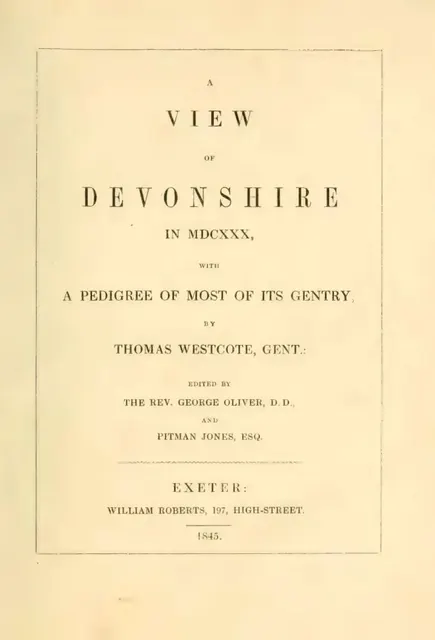
Thomas Westcote of Raddon, Shobrooke: seventeenth-century Devon historian and topographer, author of A View of Devonshire in MDCXXX.


Showing listings tagged “Tudor and Stuart” Show all listings
Thomas Westcote of Raddon, Shobrooke: seventeenth-century Devon historian and topographer, author of A View of Devonshire in MDCXXX.
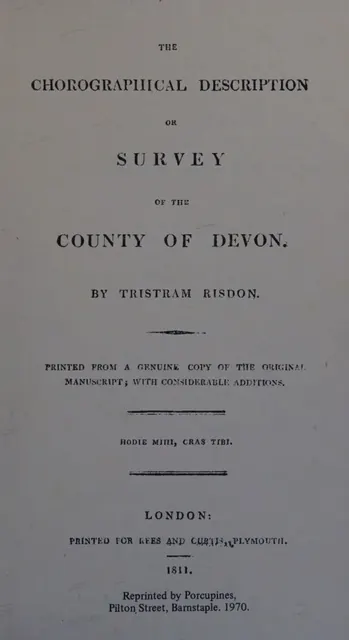
Devon antiquarian and topographer (about 1580 to 1640), author of the Survey of the County of Devon and a note-book of genealogy and heraldry.
“The only thing that brought us home on long summer evenings was the ring of a handbell by Mum standing at the field gate calling us in for supper.”
Who wrote this?
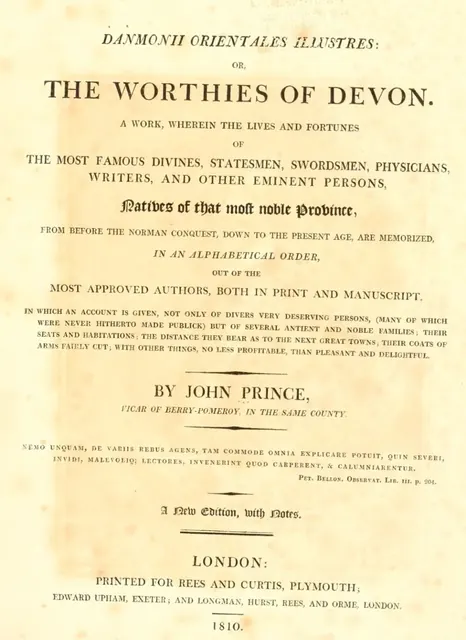
Vicar of Totnes and of Berry Pomeroy (1643 to 1723), author of The Worthies of Devon.
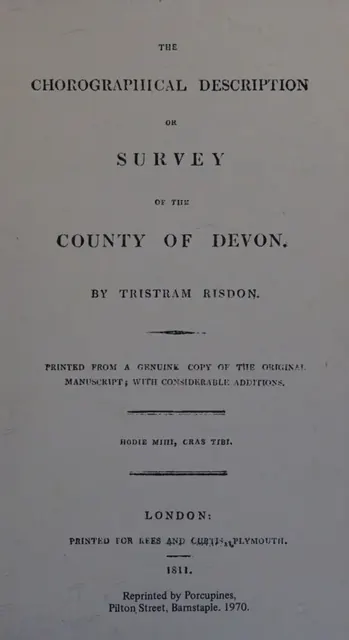
Tristram Risdon's survey of Devon, completed about 1632 and first printed in 1714; the full text came out in 1811.
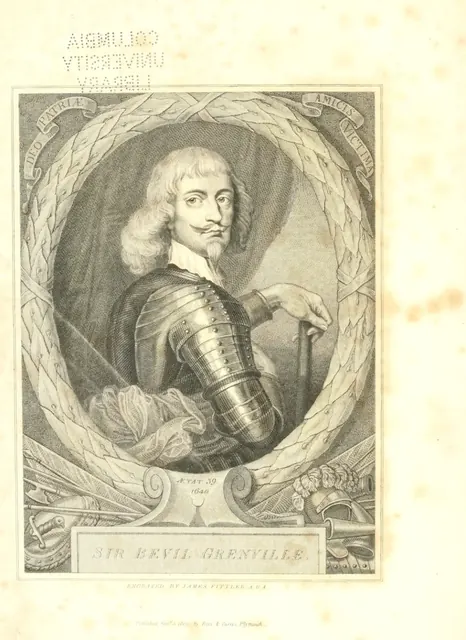
John Prince's 1701 collection of the lives of eminent Devon people, The Worthies of Devon; the Library holds the 1810 edition.
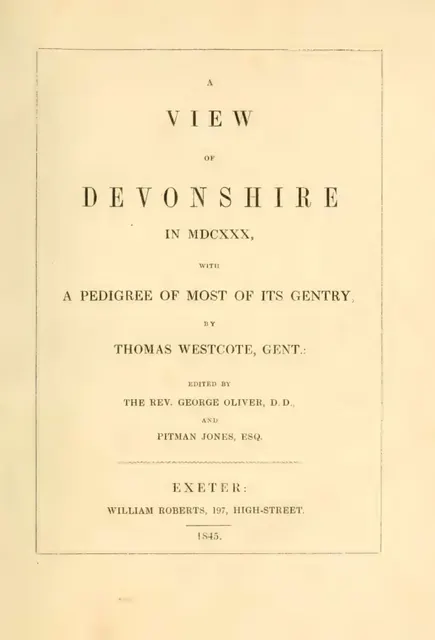
Thomas Westcote's view of Devon as it was in 1630, with the pedigrees of most of its gentry, printed at Exeter in 1845.
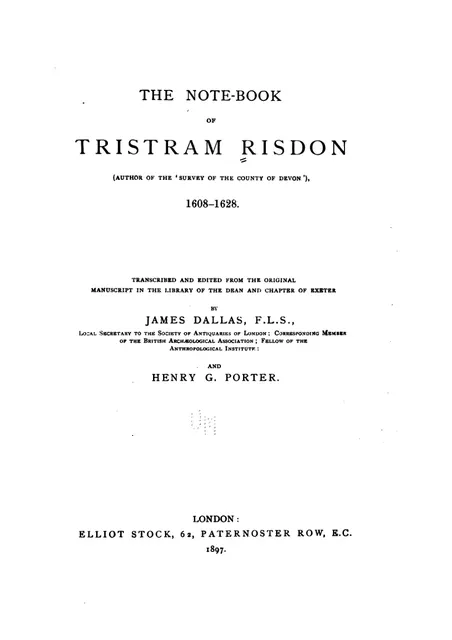
Tristram Risdon's note-book of 1608 to 1628, edited by James Dallas and Henry G. Porter and published by Elliot Stock in 1897.
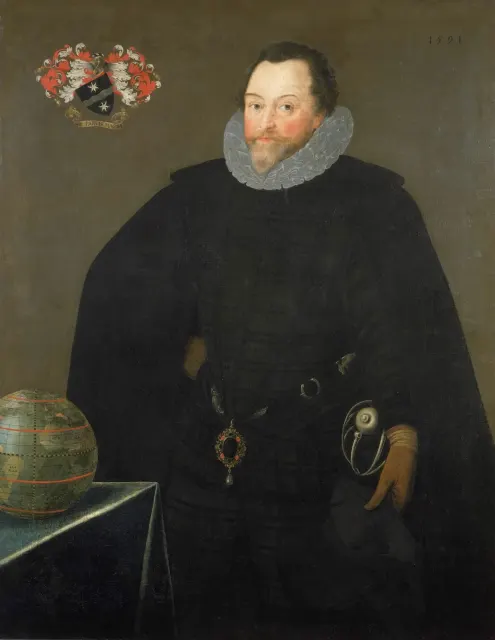
Tavistock
Elizabethan naval commander and the first Englishman to circumnavigate the globe (1577-1580), born around 1540 at Crowndale Farm near Tavistock and later the owner of Buckland Abbey, on Dartmoor's southern edge.

Plymouth
A history of Devon from the Roman occupation through the Anglo-Saxon period, the Norman Conquest and the Tudor and Stuart eras, with sketches of the county's leading figures including Sir Francis Drake, Sir Walter Raleigh and Samuel Taylor...
 Photograph by Glavind Strachan Photography
“Dwellers in the hilly parts of Devon, on Dartmoor and Exmoor, and in the villages bordering upon them, are as deeply imbued with faith in witches, as their forefathers were in the days when Alfred was king.”
Also on Our DartmoorChurch of St Mary, Sampford Spiney — Grade I church with a late 13th or early 14th-century nave and transept, a 16th-century granite tower, and a 14th-century font.
