← Browse Customs & Traditions · Browse the directory
Venville and Commoners' Rights
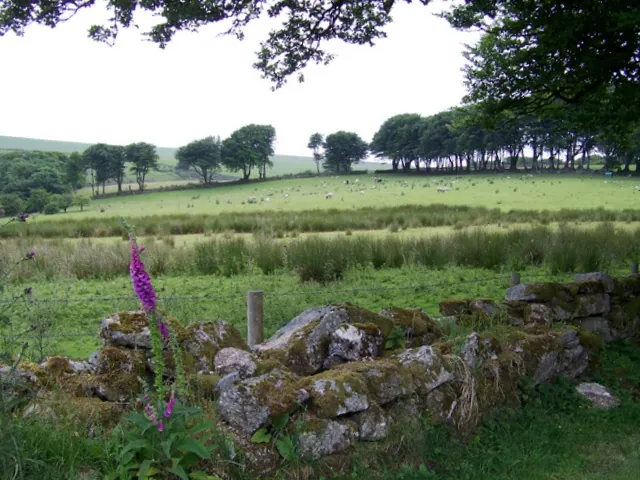
Main image: Sheep grazing at Two Bridges, in the old Forest of Dartmoor. Photo: Maigheach-gheal (CC BY-SA 2.0) via Wikimedia Commons
The central moor was the royal Forest of Dartmoor, a legal term for a hunting preserve, and the Duchy of Cornwall has owned it since 1239. Farmers in the parishes around it, said to number 23 and called the parishes 'in venville', could pay the Duchy for the right to graze their animals on the Forest by day. Some venville men were still paying in the 1970s.
Commoners elsewhere on Dartmoor hold other rights. Most attach to a farm, called the dominant tenement, and the number of animals it can carry through the winter limits how many a commoner can graze, a principle called levancy and couchancy. The other rights are turbary (cutting peat for fuel), estovers (firewood, wood for repairs and bracken for bedding), common in the soil (stone or gravel for repairs), piscary (fishing) and pannage (feeding pigs on acorns or beech mast), all for the commoner's own household use. The owner keeps the sporting and mineral rights.
In 1984, under the Commons Registration Act 1965, the Duchy did not oppose registering the Forest as common land, and those who had registered a right on it were confirmed as its commoners. Chagford Local History Society's notes on the commons cover the medieval records, including grazing rents rising in the Chagford manor accounts of 1466 and 1467.
Thoughts
Be the first to share a thought about Venville and Commoners' Rights.
Share a thought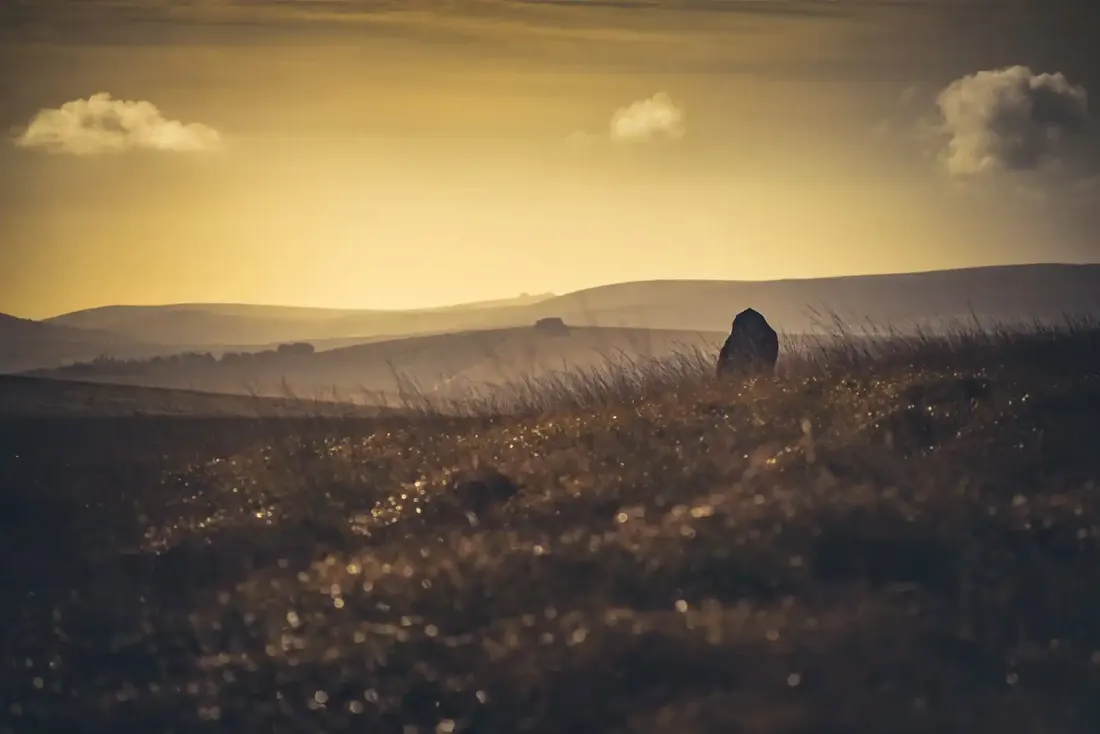 White moor menhir. Photograph by Glavind Strachan Photography
“On New Year's night the buckets in the prison froze solid in four hours. The running stream that supplied all the buildings with water was ice to the bottom ; the prisoners quenched their thirst with snow, and huddled together at night to prevent being frozen ; their breath, condensing on the ...”
Also on Our DartmoorEastern Tor — A low-lying tor east of Gutter, with scattered slabs and a hut-circle amid its debris.
Know another Dartmoor place, tor or landmark we should include? Suggest a listing, it is free.
Suggest a listing