Thirteen years before Dracula made his mark on English fiction, a Devon parson had already written a vampire story - and set it in a church he supposed to be the tiniest in world.
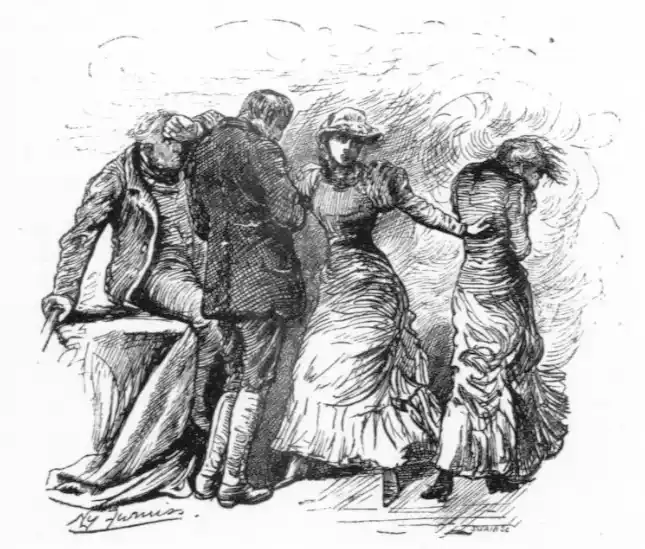
Sabine Baring-Gould is best remembered on Dartmoor for his folklore collecting and his hymn "Onward, Christian Soldiers." Less well known is that in 1884, thirteen years before Bram Stoker published Dracula, he wrote his own vampire story - and unlike much of his other Dartmoor fiction, he didn't disguise the setting.
A story that names its own church
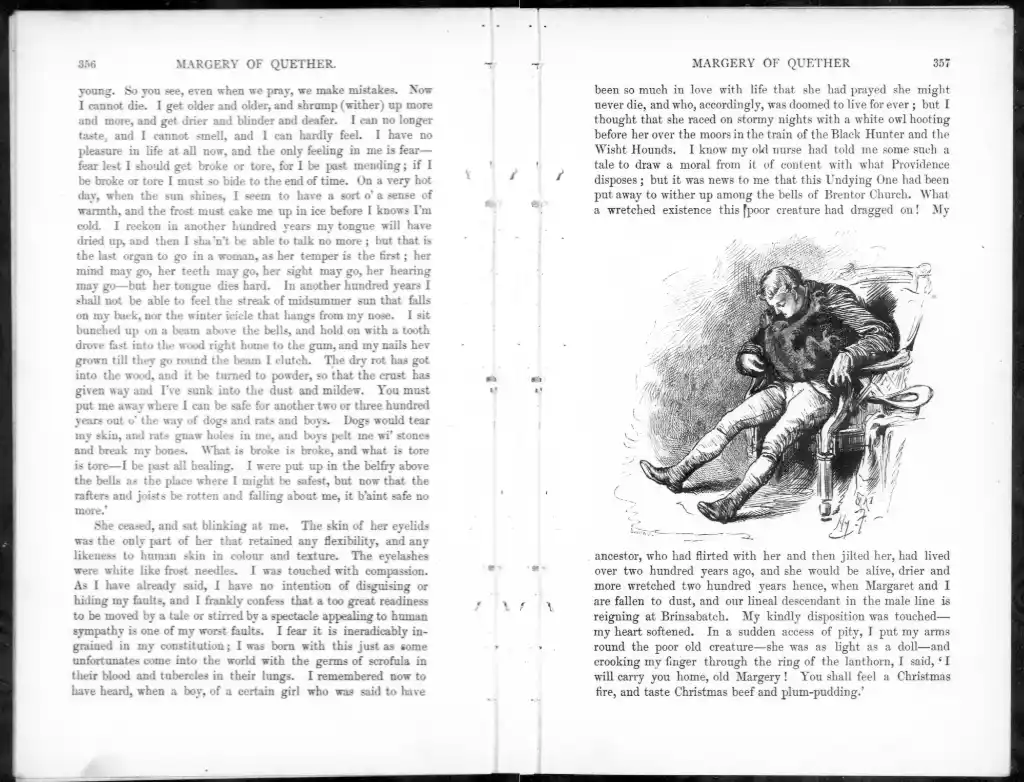
Margery of Quether was first serialised in the Cornhill Magazine in 1884
The original scans of both parts, illustrations included, are on the Internet Archive:
- The Cornhill Magazine, April 1884 (volume 49)
- The Cornhill Magazine, May 1884 (volume 49), from page 484
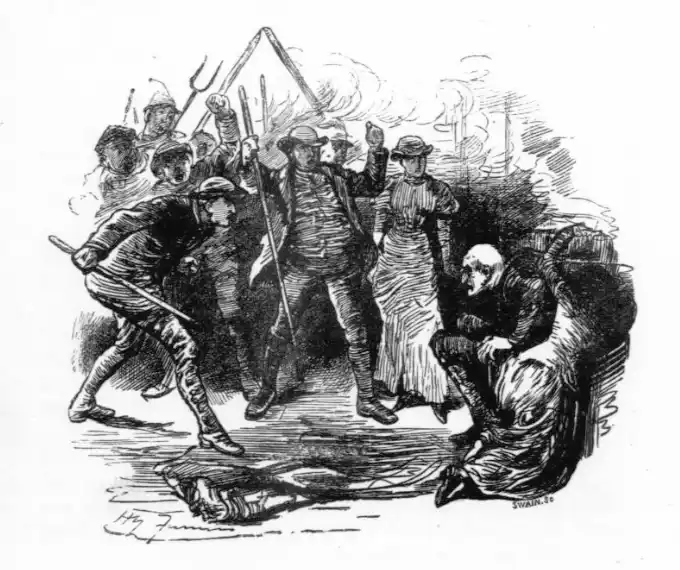
The story was then published in book form within Margery of Quether and Other Stories (Methuen, 1891). It's narrated by George Rosedhu, a Devon yeoman farmer, who describes his home ground in unmistakable, real detail:
"...at the very highest point of the moor an extinct volcanic cone protrudes, and rises to the height of about twelve hundred feet. This is called Brentor, and it is crowned with a church, the very tiniest in the world I should suppose, but tiny as it is it has chancel, nave, porch, and west tower like any Christian parish church... The church is dedicated to St. Michael."
— Sabine Baring-Gould, Margery of Quether (1891 edition)
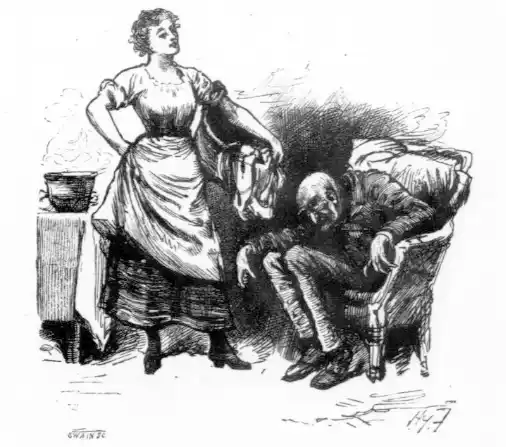
He even retells the same legend still told at Brent Tor and its church today - that the devil tore down each night's building work until the Archangel Michael threw a rock at him from behind Cox Tor, leaving marks still pointed out on the stone:
"...one night threw a great rock across and hit the Evil One between the horns, and gave him such a headache that he desisted from interference thenceforth. The rock is there, and the marks of the horns are distinctly traceable on it. I have seen them scores of times myself."
— Sabine Baring-Gould, Margery of Quether (1891 edition)
What happens at the bell tower
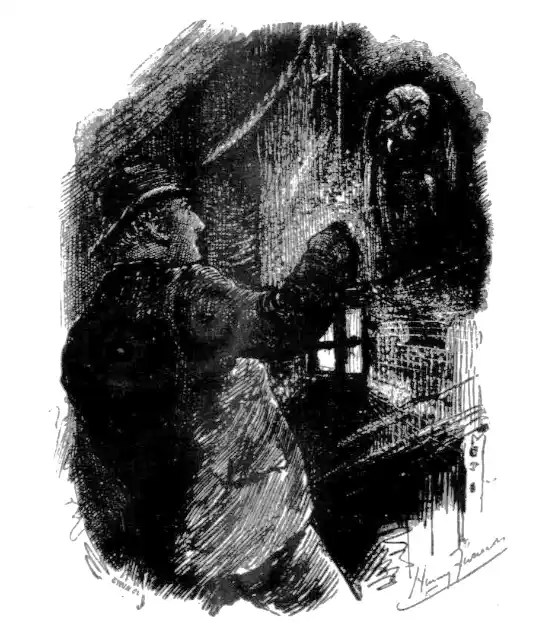
It's an old Christmas Eve custom in the story - as it was in real Dartmoor parishes - to ring the church bells at midnight to earn a small benefaction. When the regular sexton is laid up with rheumatism, he warns Rosedhu, half-joking, not to mind if he meets "Margery of Quether... her as never dies" up at the church. Rosedhu goes anyway, alone, in the dark.
What he finds in the bell tower is not a woman in a cape. It's something closer to what would later be named, in vampire fiction, a "psychic" or life-draining vampire rather than a blood-drinker in the Dracula mould:
"The creature I could now see had a human form. It was of the size of a three months old baby... In colour the object was brown, as if it had been steeped in peat water for a century, and in texture leathery. It scrambled, much as I have seen a bat scramble..."
— Sabine Baring-Gould, Margery of Quether (1891 edition)
She fastens onto him and won't let go - Baring-Gould's description of how this happens is pretty close to the neck-bite image vampire fiction would later make standard, even though what actually happens is somewhat different:
"Her tooth, which was driven into my chest like the proboscis of a mosquito, held her fast, and her hands were no more to be unlocked from my arms than the laces of old ivy from an oak."
— Sabine Baring-Gould, Margery of Quether (1891 edition)
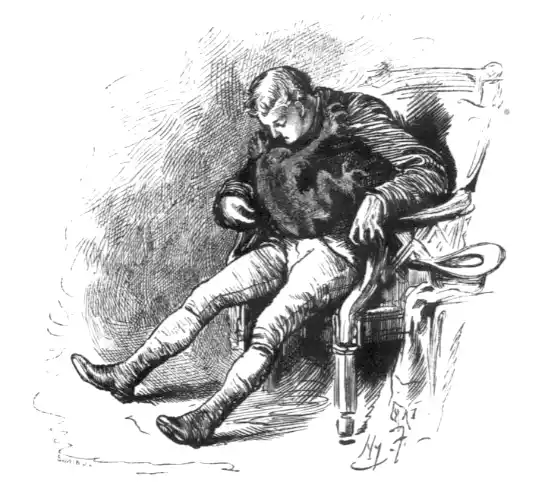
And then the passage that puts this story in anthologies of early vampire fiction today - Baring-Gould is explicit that this is not ordinary blood-drinking, but something closer to a draining of life itself:
"I would not have you suppose that Margery was sucking my blood. Nothing of the sort; that is, not grossly in the manner of a leech. But she really did, in some marvellous manner, to me quite inexplicable, extract life and health, the blood from my veins and the marrow from my bones, and assimilate them herself."
— Sabine Baring-Gould, Margery of Quether (1891 edition)
Fed, Margery grows younger and stronger through the story while Rosedhu weakens. It's real, referenced, pre-Stoker vampire fiction, set at a real church, Brentor Church, that you can still climb to today - which is exactly why it now appears in modern anthologies like Vintage Vampire Stories (Skyhorse Publishing, 2011) alongside Polidori's "The Vampyre" and Le Fanu's "Carmilla."
It seems odd to me that this story hasn't survived to be retold when people visit the beautiful little church on the hill, Brentor Church.
The confirmed Dracula connection is a different book
It's really tempting to assume Baring-Gould directly influenced Stoker's Dracula through this story. However, the evidence doesn't actually support that - and it's worth being precise about which of his books really did feed into Stoker's novel, because it isn't this one.
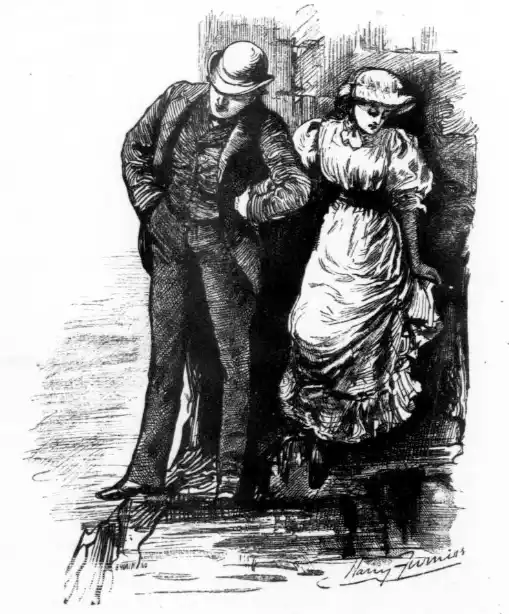
Baring-Gould's confirmed influence on Dracula is his earlier, non-fiction work, The Book of Were-Wolves (1865) - a scholarly survey of werewolf folklore and case histories, nothing to do with Dartmoor. Stoker demonstrably drew on it for the Count's physical description. Compare the two passages directly:
Baring-Gould, The Book of Were-Wolves (1865):
"By day the were-wolf has the human form, though he may be known by the meeting of his eyebrows above the nose."
Stoker, Dracula (1897), Jonathan Harker's first sight of the Count:
"His eyebrows were very massive, almost meeting over the nose, and with bushy hair that seemed to curl in its own profusion."
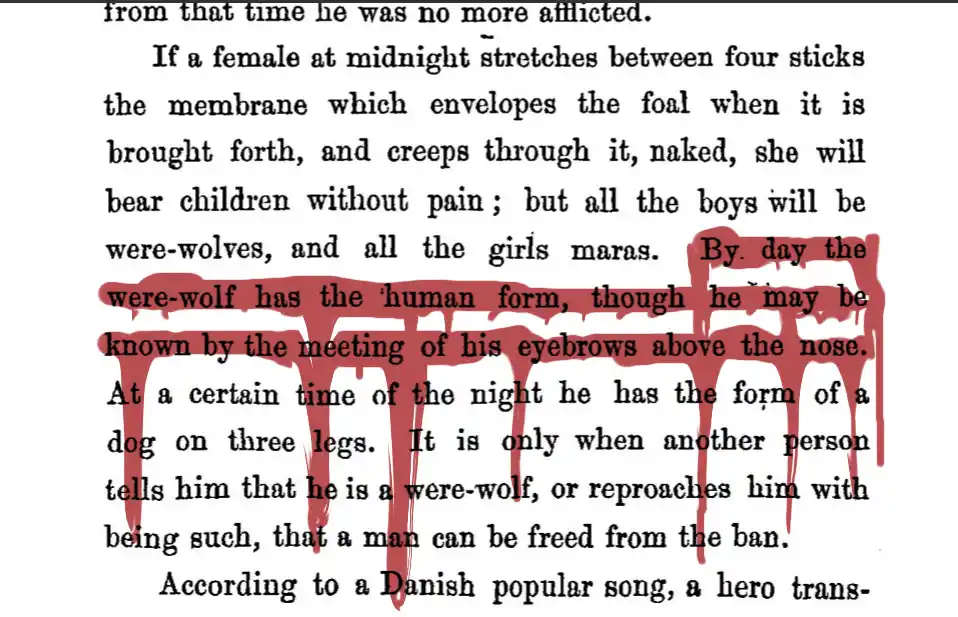
That's about as close as two independently written sentences get without direct quotation - a distinctive, specific physical detail (the eyebrows meeting over the nose as a mark of the supernatural) appearing in near-identical phrasing thirty-two years apart. This is the real, demonstrable Baring-Gould/Dracula link. Though it's lovely to speculate that Mr Stoker did read Margery of Quether and a little bit of Dartmoor made its way into the most famous vampire book of all time!
Margery of Quether's connection to Dracula is real but much looser: I've found reference to a Daily Mail review of Stoker's novel, printed 1 June 1897, mentioned Margery as a comparable earlier work - but I cannot find that article and anyway, it's only evidence that literate contemporaries saw the resemblance, not evidence that Stoker had read it or drew from it.
No letter, notebook or acknowledgement from Stoker naming the story has been found. Treat the two threads honestly as what they are: one confirmed textual borrowing (Were-Wolves), and one story that got there first and was noticed as a parallel, but was never claimed by Stoker himself.
I did find this from the 3rd June of the same year:
"Were-wolf, Lycanthrope, Loup-garou—the name was familiar enough in Europe some centuries ago. The idea that a man can turn himself into a wolf begins early in recorded literature; we remember the story of Lycaon in Ovid's 'Metamorphoses' and the noted wizard Mœris in Virgil's 'Eclogues,' who by the aid of Pontic poisons hid himself in the woods, and could bring the ghosts of dead men from their sepulchres. What has Mr. Bram Stoker been reading? Has he got hold of Richard Verstegan, who tells us in 1605 that it was a common thing in England for certain savage men to change at nighttime into wolves, and traverse the country seeking whom they could devour? Or is his authority Mr. Baring-Gould, who, in 1865, published 'The Book of Were-wolves,' together with every kind of rationalistic and perhaps not very convincing explanation that some specimens of the human race were born with a thirst for human blood?"
Either way, the win for Dartmoor is the same. Baring-Gould's Dartmoor is usually recognisable but not always named outright - Margery of Quether is the rare exception where he wrote a real, still-standing Dartmoor landmark into a genuine piece of vampire fiction, by its own name, thirteen years before the word "Dracula" existed.