← Browse Customs & Traditions · Browse the directory
Swaling
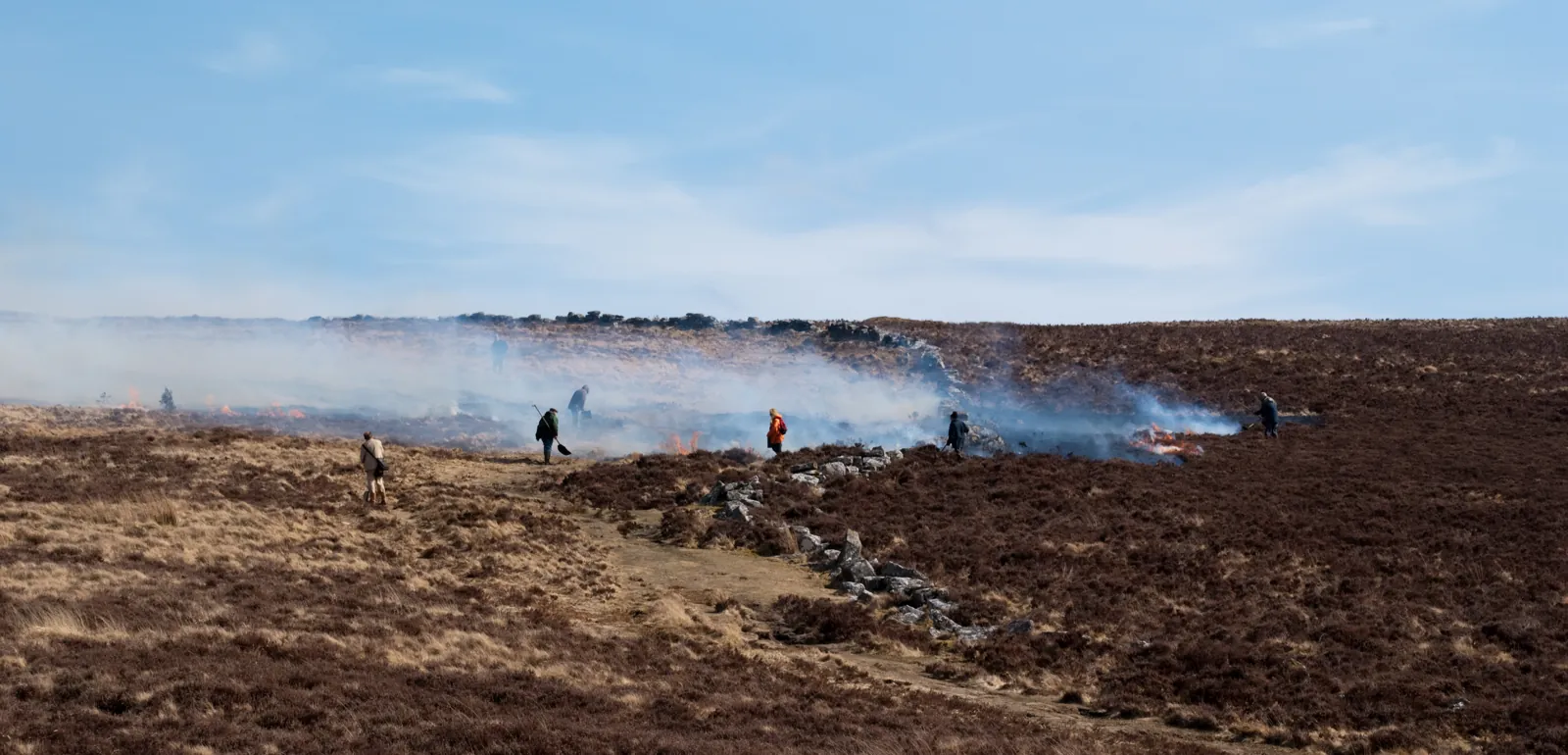
Main image: Swaling on Dartmoor: a controlled burn of gorse and heather. Photo: Herbythyme (CC BY-SA 4.0) via Wikimedia Commons
Swaling is an ancient practice in which commoners burn tall, overgrown heather, gorse and long rank grass. They do it to improve the grazing for their animals in the following season. Where too few animals graze an area, the overgrown vegetation builds up and creates a danger of accidental fire, which swaling also reduces.
Burning is allowed only in the winter months, ending on 15 April, and on Dartmoor a voluntary code asks commoners to stop by 31 March because ground-nesting birds in the south west start nesting by then. The Dartmoor National Park Authority gives 1 October as the start of the season, and the Commoners' Council's own page gives 1 November, so check the current dates before relying on either. How often and over what area any one place can be burnt is controlled by the Heather and Grass Burning Code.
Before a burn, commoners tell the Fire and Rescue Service, the National Park Authority, Natural England and the Commoners' Council. Sites have fire breaks cut or use natural boundaries such as tracks and walls, and commoners stay with the fire, equipped to put it out. The public are asked not to light fires and to remember the higher fire risk in dry weather.
Thoughts
Be the first to share a thought about Swaling.
Share a thoughtKnow another Dartmoor place, tor or landmark we should include? Suggest a listing, it is free.
Suggest a listing