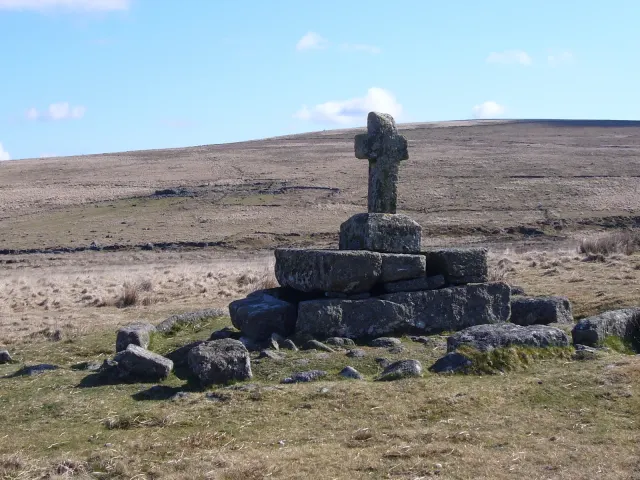
- Grid reference: SX 625 704
- Where: south-east edge of Fox Tor Mires, about 500 m north of Fox Tor
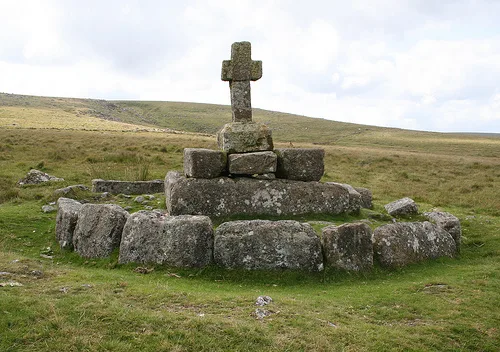
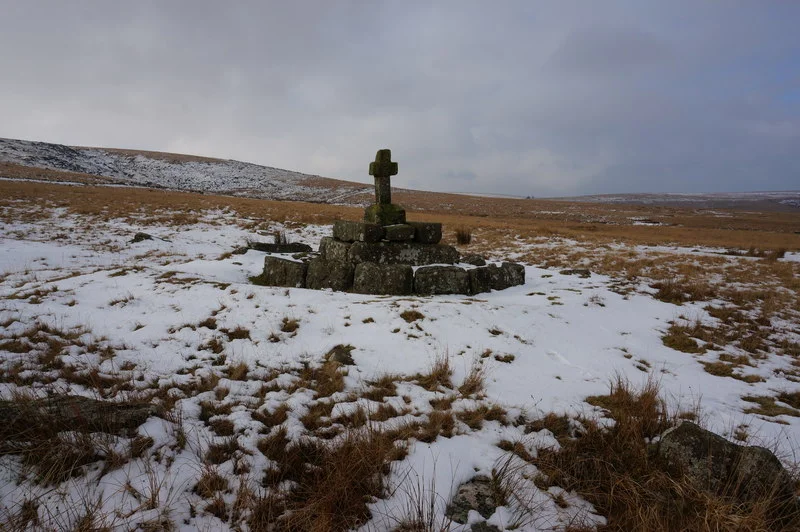
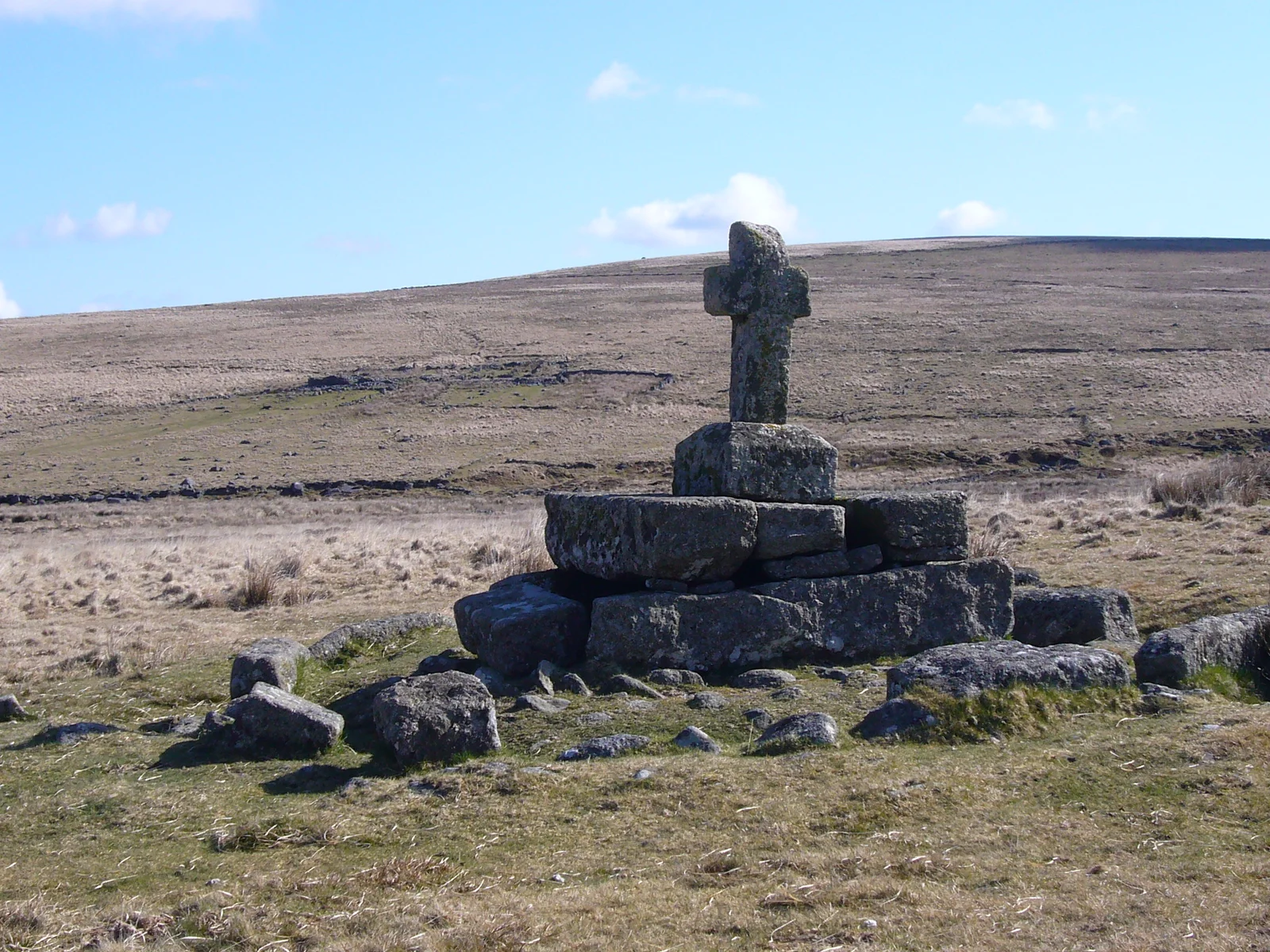
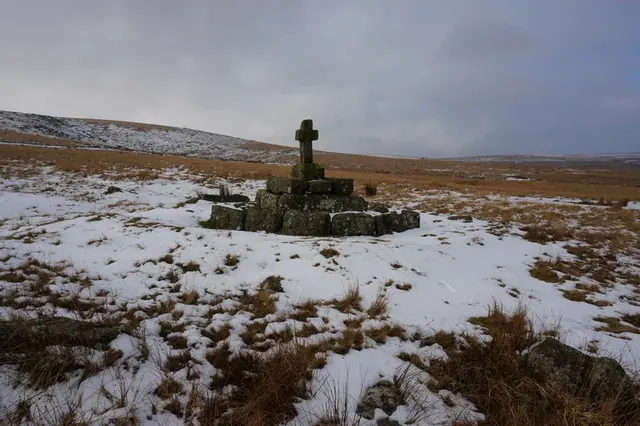
- What: a granite cross on a stepped pedestal over a kistvaen (stone burial chamber)
Childe's Tomb is a granite cross on a granite pedestal beside Fox Tor Mires, with a kistvaen under the base. What stands today is a reconstruction. The original was a three-step pedestal carrying an octagonal block and a cross, and when Thomas Windeatt began building Fox Tor Farm in 1812 his workmen took most of its stones for the farm and its doorsteps. William Crossing found the kistvaen in 1882 and in 1902 located nine of the twelve pedestal stones. The cross was put up again in 1890 under the Dartmoor Preservation Association, with stones missing.
The story attached to it is Childe the Hunter, said to be Ordulf, son of Ordgar, an 11th century Earl of Devon. Lost on the moor in the cold, he is supposed to have killed his horse and crept inside it for warmth, leaving a note that whoever buried him in their church would inherit his Plymstock estate. The monks of Tavistock Abbey found the body, the men of Plymstock planned an ambush at a bridge, and the monks built a new bridge elsewhere and buried him at the abbey. Tristram Risdon wrote the tale down about 1632, and reported an inscription that nobody has found since. Seth Lakeman recorded Childe the Hunter on his 2006 album Freedom Fields.
The tomb stands on the line of cairns that marks the Monks' Path between Buckfast and Tavistock abbeys. The tale is a legend, not a record: there is no evidence who, if anyone, lies in the kistvaen.
The written trail behind this monument runs through four generations of Dartmoor writers who never quite agreed on it. Tristram Risdon's Survey of Devon (c.1632) already tells the horse story, writing that Childe "was enforced to kill his horse, and embowelled him, to creep into his belly to get heat." Anna Eliza Bray (1836) and Sabine Baring-Gould (1900) each printed a different version of the rhyme said to explain Childe's bequest of his land to whichever abbey buried him. By 1902 William Crossing was disputing Baring-Gould in print, questioning whether the surviving kistvaen here is really Childe's grave at all. Read the fuller legend of Childe the Hunter.